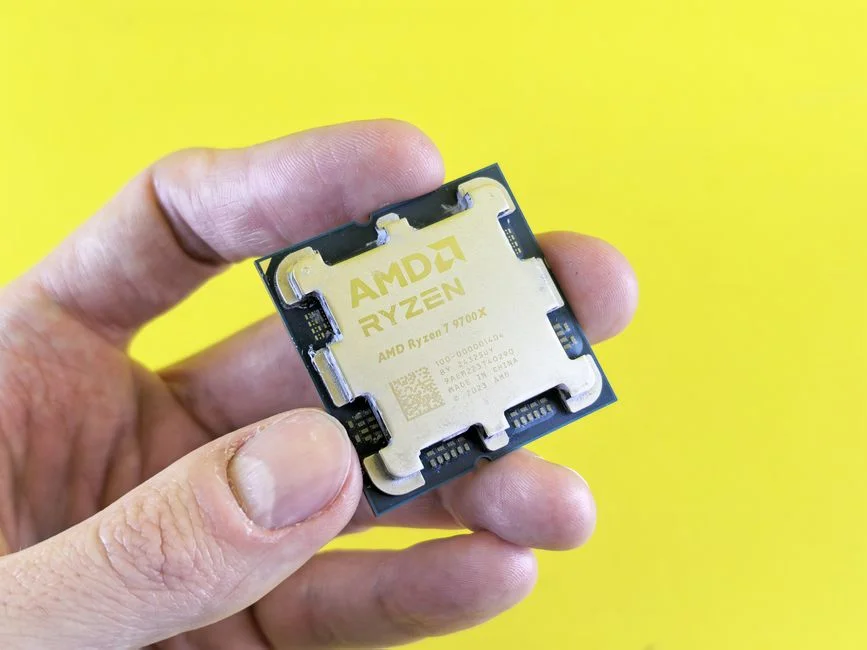
Chinese researchers have successfully constructed the world's fastest supercomputer, according to reports confirmed by multiple technology analysts this week. The achievement comes despite years of escalating restrictions on advanced semiconductor technology exports to China by the United States government. The machine reportedly achieves performance benchmarks that outstrip any competing system currently in operation globally.
The development marks a significant milestone in the ongoing technology competition between Washington and Beijing. American officials have spent billions of dollars in export control enforcement to prevent precisely this kind of advancement, targeting chip manufacturing equipment and advanced processors that Beijing needs for cutting-edge computing projects.
The Technical Achievement

The supercomputer represents a leap in raw computational power that industry observers say few outside China believed possible under current sanctions regimes. State-affiliated research institutions in China collaborated on the project, combining domestically developed components with creative engineering solutions to overcome hardware limitations imposed by American export controls.
Independent technology analysts have examined the available performance data and confirmed that the system demonstrates capabilities that place it ahead of machines operated by the US Department of Energy and leading American technology companies. The architecture reportedly relies on Chinese-made processors, a notable departure from earlier Chinese supercomputers that depended heavily on imported American chips.
American Export Restrictions Under Scrutiny


The US Commerce Department has maintained strict controls on advanced semiconductor technology sales to China since 2019. These restrictions have targeted companies including Nvidia and AMD, requiring licenses for exports of high-performance computing chips. American officials justified the measures by citing national security concerns and the potential military applications of advanced computing technology.
Critics of the export control regime have long argued that such restrictions would simply accelerate Chinese domestic development efforts. The latest supercomputer achievement appears to validate those predictions. Semiconductor industry executives in the United States have expressed concern that each round of restrictions pushes Beijing to invest more heavily in indigenous alternatives.
Impact on American Chipmakers
Nvidia and other American companies have lost significant revenue from Chinese markets since export controls tightened. Their stocks have shown sensitivity to developments in US-China technology relations, with shares dropping whenever reports suggest further restrictions or rising whenever trade tensions appear to ease. Investors continue to monitor the situation closely for signs of policy shifts.
The export controls have created a perverse incentive structure. American chipmakers face permanent erosion of their market position in China, while Chinese companies simultaneously build the technical capability to compete globally without American components. The supercomputer breakthrough demonstrates that this second effect is already materialising.
Global Computing Competition Heats Up
The supercomputer ranking race has traditionally been dominated by American, Chinese, and Japanese systems. The new Chinese machine would claim the top position if confirmed by independent benchmark testing. International scientific computing organisations have taken note, with some questioning whether they will face pressure to limit collaboration with Chinese researchers using such powerful systems.
European Union technology officials have been studying the implications of both American restrictions and Chinese counter-developments. The continent lacks comparable domestic supercomputing infrastructure, raising questions about strategic autonomy in advanced computing technology. Several EU member states have announced increased funding for domestic semiconductor and computing research in response.
Business and Investment Implications
For technology investors, the Chinese breakthrough carries several important implications. Companies positioned in the advanced semiconductor supply chain face continued uncertainty about export policy. Meanwhile, Chinese technology firms developing alternatives to American components represent either a competitive threat or a potential investment opportunity depending on geopolitical perspective.
Data centre operators and cloud computing providers worldwide are watching closely. Advanced computing capability affects everything from artificial intelligence training to climate modelling and drug discovery. Any technology that alters the global balance of computing power has downstream effects on industries far beyond the semiconductor sector.
The performance demonstrated by the Chinese supercomputer suggests that software optimisation and system architecture can partially compensate for limitations in individual component capabilities. This finding has implications for American technology companies seeking to maintain performance advantages through hardware-only strategies.
Semiconductor Industry Restructuring
The global semiconductor industry has entered a period of structural change driven by security concerns and supply chain resilience priorities. American subsidies under the CHIPS Act have encouraged domestic manufacturing investment, while Chinese government funding has similarly supported domestic chip development. The supercomputer achievement demonstrates that Chinese efforts are producing measurable results.
Taiwan Semiconductor Manufacturing Company remains a critical node in global supply chains for both American and Chinese technology development. The island's geopolitical position ensures it remains central to the technology competition narrative. Investors in TSMC and its suppliers continue to navigate the complex intersection of commercial opportunity and geopolitical risk.
Japanese equipment manufacturers have also found themselves caught between American restrictions and Chinese markets. Companies including Tokyo Electron and Screen Holdings supply crucial manufacturing technology used by Chinese chipmakers. American pressure has complicated these business relationships, though total decoupling has proven difficult to achieve.
What Comes Next
American policy officials are expected to review export control effectiveness following the supercomputer announcement. Some analysts anticipate either tightened restrictions targeting additional technology categories or renewed diplomatic pressure on allied nations to coordinate more closely on semiconductor controls. Others argue that the existing approach has reached its limits and requires fundamental reassessment.
Independent verification of the Chinese supercomputer's performance through standardised benchmark testing will likely occur over the coming weeks. The results will shape how governments and investors interpret the significance of the achievement. Should the benchmarks confirm the reported performance levels, expect significant policy discussions in Washington, Brussels, and Tokyo.
Technology market watchers should monitor several indicators in the coming months. Congressional hearings on export control effectiveness are scheduled for later this quarter. Quarterly earnings reports from American semiconductor companies will reveal updated assessments of China market exposure. Finally, Chinese government statements on technology self-sufficiency goals will signal how Beijing intends to build on this achievement.
See Also
- Croatia Positions Itself as Europe's New Gateway for Asian Trade
- China's Pet Law Gap Exposed After Celebrity Dog Sold for US$25 and Eaten
The performance demonstrated by the Chinese supercomputer suggests that software optimisation and system architecture can partially compensate for limitations in individual component capabilities. Semiconductor Industry Restructuring The global semiconductor industry has entered a period of structural change driven by security concerns and supply chain resilience priorities.