Advanced semiconductor packaging has quietly become one of the most contested technologies in the global economy. The United States government has now moved to restrict exports of High Bandwidth Memory, a specialised memory chip essential for running large artificial intelligence models, a decision that places Taiwan's semiconductor factories at the centre of a high-stakes technological showdown with Beijing.
The Technology Nobody Heard of Until Now
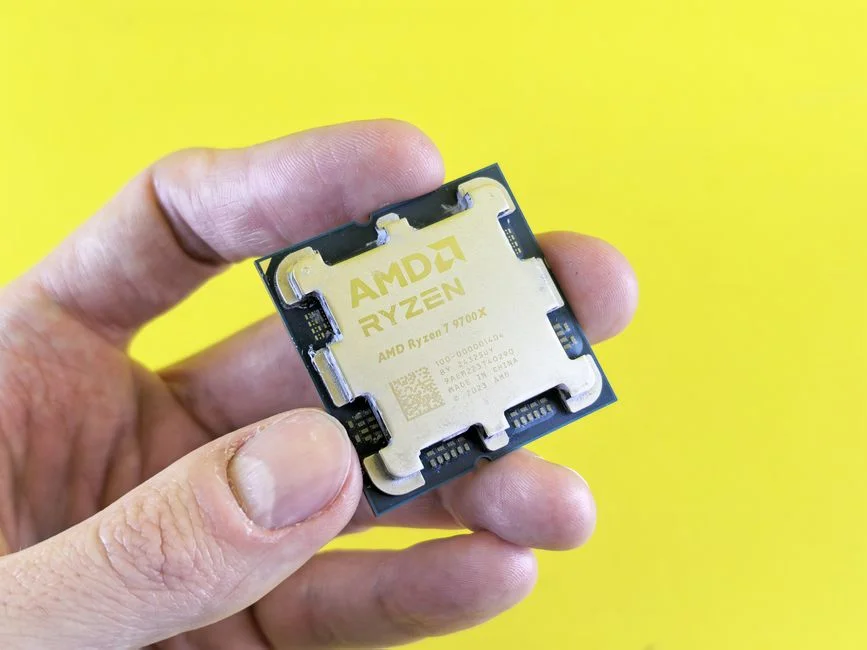
High Bandwidth Memory, commonly known as HBM, sits inside AI chips and allows massive amounts of data to move at extraordinary speeds. Without HBM, the most powerful graphics processing units used to train AI systems simply cannot function at their rated performance. This technology remained obscure outside engineering circles for years. That changed when the generative AI boom ignited demand for every component that makes AI hardware work.
Taiwan Semiconductor Manufacturing Company produces the vast majority of these advanced chips at facilities across the island, including its flagship fabs in Hsinchu and Tainan. SK Hynix of South Korea and Micron Technology of the United States manufacture the HBM memory itself. All three companies now operate under a web of export restrictions designed to slow China's ability to develop competitive AI systems.
United States Draws a New Line


The Commerce Department announced expanded controls in October that explicitly targeted HBM2 and more advanced memory types destined for China. The rules prevent companies from selling chips that enable AI training capabilities above specified performance thresholds. United States officials framed the move as a necessary step to protect national security, arguing that advanced AI systems could give China military advantages.
The restrictions build on earlier measures that targeted advanced processors like Nvidia's A100 and H100 chips. Industry analysts estimate the cumulative effect has removed roughly $50 billion worth of advanced AI hardware from the Chinese market over the past three years. That figure represents both direct sales lost and the downstream economic activity those chips would have supported.
The Business Fallout
Nvidia has scrambled to develop compliant hardware that falls below regulatory thresholds. The company's H20 chip, specifically engineered for the Chinese market, has become a bestseller there despite offering significantly reduced performance compared to versions sold elsewhere. TSMC manufactures these chips under the export restriction framework, creating a delicate balancing act between serving American clients and maintaining its role as a global supplier.
Major technology companies in the United States have reacted with a mixture of concern and opportunism. Google, Microsoft, and Amazon have all accelerated investments in chip manufacturing partnerships to secure supply chains that run through Taiwan. These firms view the concentration of advanced semiconductor production on a single island as a strategic risk, not merely a supply chain inconvenience.
Taiwan's Fragile Strategic Position
Taiwan produces more than 90 percent of the world's most advanced logic chips, according to industry data from the Taiwan Semiconductor Industry Association. That dominance was built over decades of government investment, engineering talent, and deeply integrated supplier networks. The concentration creates what economists call a chokepoint, a single point of failure that can disrupt global industries if something goes wrong.
Geopolitical tensions have made that chokepoint a source of constant anxiety for investors and corporate planners. Should cross-strait relations deteriorate, the global AI industry would face immediate shortages of components that cannot be replaced quickly or cheaply. TSMC has begun diversifying production to Japan and the United States, building new facilities in Arizona and Kumamoto, but these sites will take years to reach full capability.
Market Reactions and Investor Anxiety
Semiconductor stocks have exhibited heightened volatility as investors weigh the impact of tighter controls against the secular demand for AI hardware. TSMC's American depositary receipts have swung by double-digit percentages in single sessions when diplomatic headlines emerged. The Philadelphia Stock Exchange Semiconductor Index has become one of the most-watched gauges of technology sector sentiment.
Private equity and venture capital firms have shifted their focus toward companies working on alternatives to HBM and advanced packaging. Several startups have attracted funding specifically to develop technologies that could reduce dependence on Taiwanese manufacturing. Investors are also funding companies in the United States, Japan, and Europe that aim to build domestic semiconductor capabilities.
China's Response and Alternative Routes
Chinese technology firms have pursued multiple strategies to circumvent the restrictions. Some companies have purchased slightly older equipment and clustered multiple chips together to approximate the performance of restricted hardware. Others have invested heavily in domestic semiconductor development, though progress remains limited by the complexity of manufacturing advanced chips.
The Chinese government announced a $150 billion fund to support domestic chip development, one of the largest industrial policy initiatives in history. Officials in Beijing have also pressured foreign companies to continue supplying the Chinese market, using access to the massive Chinese consumer market as leverage. Whether these efforts can produce meaningful alternatives to American and Taiwanese technology remains uncertain.
What Comes Next
The United States is expected to review its export control framework in the coming months, with industry sources suggesting further restrictions could target additional types of advanced packaging and memory technology. The Commerce Department has indicated it will monitor compliance closely and has imposed penalties on companies found to have violated the rules.
For investors, the practical implications are clear. Companies deeply exposed to Taiwanese semiconductor manufacturing carry geopolitical risk that cannot be easily diversified away. Firms developing alternatives, whether in chip design, materials science, or manufacturing equipment, represent potential beneficiaries of the ongoing technology decoupling. The niche technology nobody discussed five years ago has become a focal point for anyone trying to understand where power in the AI era will concentrate.
See Also
- China's Coal Mining Disaster Triggers Nationwide Outrage — Economic Implications Loom
- Samsung Surges as South Korea and Taiwan Outpace India's Tech Growth