At 3,500 metres above sea level in the Himalayas, a peculiar forest of giant ice cones is rising where none existed before. Locals call them ice stupas — artificial glaciers engineered to melt precisely when spring planting begins, supplying water to villages that have watched their streams run dry for months longer each year. The innovation, born in the Indian region of Ladakh, is now attracting serious attention from investors and governments grappling with a $50 billion water management challenge across Asia's mountainous interior.
How Ice Stupas Work
The technology is elegantly simple. During the bitter Ladakh winter, when temperatures plunge to minus 30 Celsius, workers channel glacial meltwater through pipes into shade structures. The water sprays upward, freezes in the cold air, and accumulates into a cone-shaped mass. By late spring, the ice pyramid begins melting at its base, releasing a steady drip irrigation supply exactly when crops need water most. Each stupa can hold up to 1.5 million litres of water, and unlike natural glaciers, its release timing can be controlled by adjusting the structure's height and orientation.
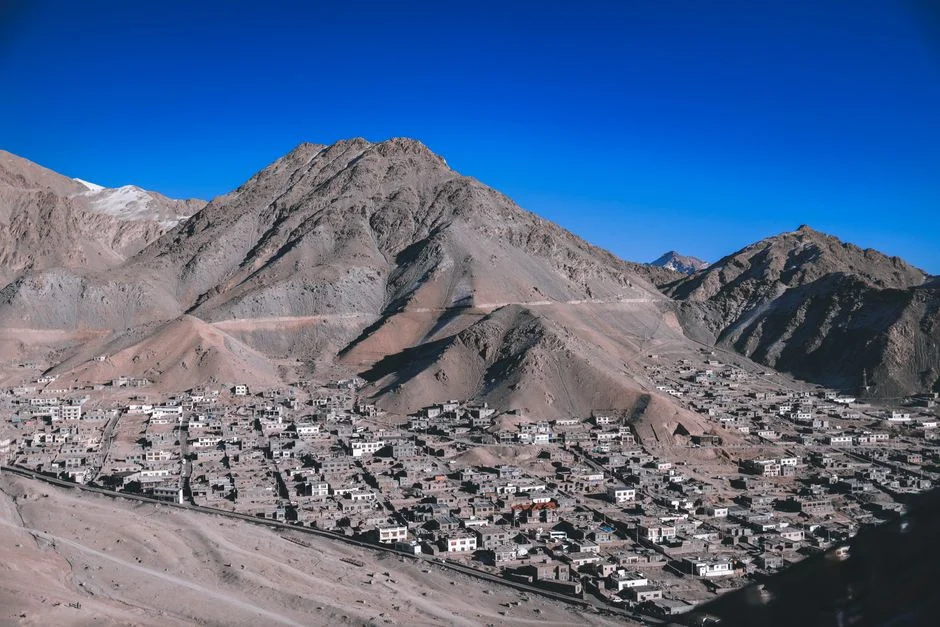
The man credited with popularising the design is Sonam Wangchuk, an engineer and educator based in the village of Phyang. His organisation, the Himalayan Institute of Alternative Ladakh, has built more than a dozen large stupas across the region since 2013, along with dozens of smaller versions tended by individual farmers. The stupas cost roughly 100,000 rupees to construct — about $1,200 at current exchange rates — a fraction of the expense involved in building conventional reservoirs in such rugged terrain.
The Economics of Water Scarcity
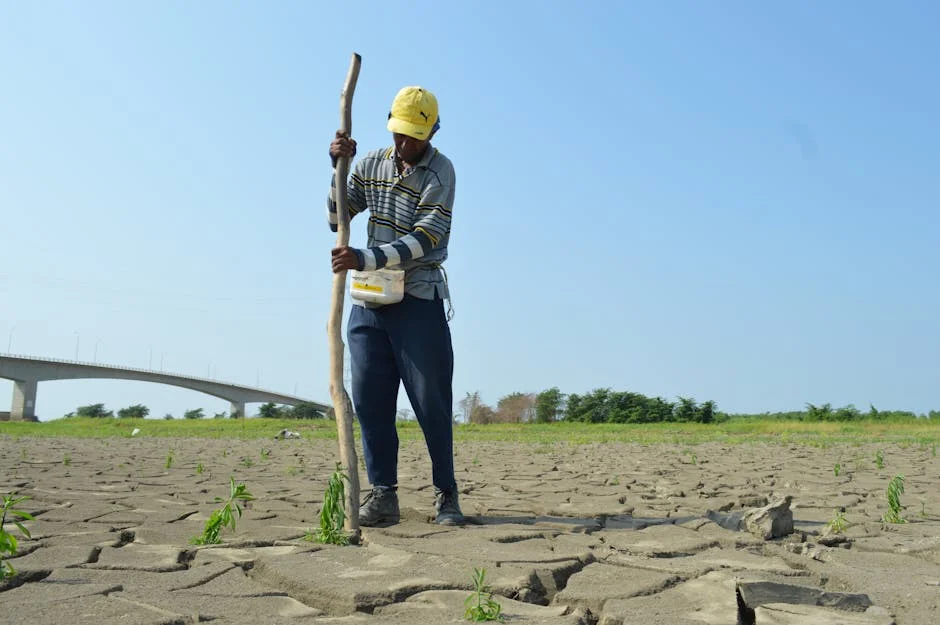
The stakes could hardly be higher. Across the Hindu Kush Himalayan range, which spans eight countries including India, Nepal, and Bhutan, some 240 million people depend on glacial meltwater for their primary water supply. Climate scientists project that a 1.5-degree Celsius rise in global temperatures — a threshold already breached in high-altitude regions — could eliminate up to a third of the region's glaciers by 2050. For mountain villages, this is not an abstract future problem. It is a present emergency measured in failed harvests and empty taps.
Water scarcity already costs the global economy roughly $500 billion annually in lost agricultural productivity, according to World Bank estimates. For India's Himalayan states, the economic exposure is concentrated in subsistence agriculture and hydroelectric power generation. Ladakh's economy, small but growing through tourism, remains acutely vulnerable to disruptions in water supply for both local consumption and the glacier-fed Indus River system downstream.
The Investment Case for Climate Adaptation
That vulnerability is precisely why impact investors and development finance institutions are watching the ice stupa model closely. Unlike large-scale infrastructure projects that require years of planning and billions in capital, community-built ice structures offer rapid deployment at minimal cost. The economics compare favourably with desalination plants or long-distance pipeline projects, which can cost hundreds of millions of dollars per facility in remote terrain.
Several venture capital funds focused on climate technology have reportedly held discussions with Wangchuk's institute about scaling the model beyond Ladakh. A spokesperson for the Asian Development Bank confirmed the institution was reviewing potential financing mechanisms for ice stupa expansion in Nepal and Bhutan, though no formal commitment has been made. The appeal is obvious: low capital expenditure, high social return, and replicability across a dozen countries facing similar glacial decline.
Business Implications for Water Management
The ice stupa phenomenon is forcing a rethinking among companies that sell conventional water infrastructure. Traditional approaches — deep wells, pumped storage, pipeline networks — often fail in high-altitude environments where construction seasons are short and logistics costs are prohibitive. Ice stupas sidestep these problems entirely by working with the climate rather than against it.
For agricultural technology firms, the innovation opens a potential new market segment. Companies specialising in drip irrigation and controlled-release water systems could find natural partners in ice stupa projects, offering complementary products that maximise the value of the seasonally released water. Indian agriculture technology startups are already exploring such combinations, according to industry sources familiar with the discussions.
Challenges and Limitations
Critics point out that ice stupas are not a universal solution. Their effectiveness depends heavily on local topography, water availability, and winter temperatures — conditions that vary enormously across the Himalayan arc. In regions where winters are milder or water sources are already depleted, the technology may not function at all. The stupas also require annual reconstruction, as each cone melts completely by summer's end.
There are governance questions too. Without clear ownership structures and maintenance protocols, ice stupas can fall into disrepair or become subject to disputes between villages competing for limited water. Ladakh's local government has begun drafting guidelines for stupa management, but the regulatory framework remains nascent.
Replicating the Model
The Indian government has taken notice. The Ministry of Jal Shakti, which oversees water resources, sent a delegation to Ladakh last year to study ice stupa performance firsthand. A ministry official, speaking on condition of anonymity, said the government was considering subsidies for ice stupa construction in other Himalayan states, including Sikkim and Himachal Pradesh. An announcement could come as early as the next budget cycle.
Beyond India's borders, Nepal has emerged as the most likely next testing ground. Nepal's high-mountain communities face even more acute glacial loss than Ladakh, and international donors have expressed interest in funding pilot projects. The Nepalese government signed a preliminary agreement with Wangchuk's institute in January, local media reported, though construction timelines have not been announced.
What Happens Next
The coming summer melt season will provide crucial data on whether this winter's ice stupas performed as designed. Villagers across Ladakh are monitoring their cones with keen attention — a successful melt that waters their barley and vegetable plots would validate years of experimentation and potentially unlock wider funding. A failure would prompt soul-searching among backers of the technology.
Watch for a decision from the Asian Development Bank by mid-year on whether to commit financing for a regional ice stupa programme spanning three countries. That decision could determine whether this Himalayan experiment remains a local curiosity or becomes a template for water management from Afghanistan to Myanmar.
See Also
- India Battles Extreme Weather: Heatwave Disrupts Agriculture Amid Snow in Himalayas
- Rs 2.5 Lakh Japan Trip Exceeds 25 Years of Indian School Fees
Indian agriculture technology startups are already exploring such combinations, according to industry sources familiar with the discussions.Challenges and LimitationsCritics point out that ice stupas are not a universal solution. An announcement could come as early as the next budget cycle.Beyond India's borders, Nepal has emerged as the most likely next testing ground.
What is the latest news about indias mountain villages bet on ice pyramids to solve water crisis?
Why does this matter for world-affairs?
What are the key facts about indias mountain villages bet on ice pyramids to solve water crisis?