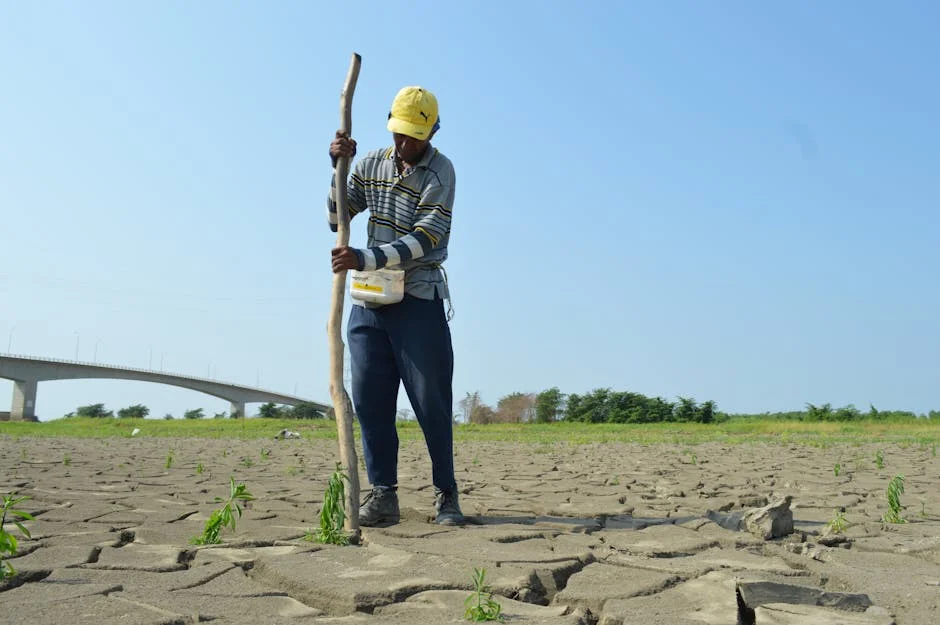
India is preparing for a challenging monsoon season in 2026, with forecasts indicating below-average rainfall due to the anticipated impact of El Nino. The India Meteorological Department (IMD) has alerted stakeholders across the agricultural sector, warning that the El Nino phenomenon could significantly disrupt water supply in key farming regions.
Forecasts and Implications for Agriculture
The IMD announced its projections this week, suggesting that monsoon rainfall could dip by as much as 15% below the long-term average. This development is particularly concerning for farmers in states such as Punjab and Haryana, where agriculture remains heavily reliant on consistent monsoon rains. A reduction in rainfall could critically affect crop yields and agricultural productivity.

In response, many farmers are reassessing their planting strategies for the upcoming season. Some are considering diversifying their crop choices to include more drought-resistant varieties. The IMD's forecasts highlight the urgency for farmers to adapt to the changing climate conditions influenced by El Nino.
Market Reactions and Agricultural Business Strategies


The anticipated decline in rainfall has already begun to affect market sentiment. On the agricultural commodities exchange, prices for staple crops, including wheat and rice, surged by 5% and 3%, respectively, in response to the potential supply constraints. Investors are now closely monitoring these trends, with many viewing agricultural stocks as a promising area for investment.
Companies involved in the agricultural supply chain are also preparing to adjust their strategies. Firms such as Godrej Agrovet are expected to implement measures to mitigate the impact of reduced crop yields, which may include enhancing supply chain logistics and investing in research for drought-resistant crops. This proactive approach could position them favourably in a volatile market.
Investor Sentiment and Long-Term Economic Considerations
Investors are becoming increasingly concerned about the broader economic implications of a poor monsoon. Agriculture constitutes a significant portion of India’s GDP, accounting for approximately 16%. A decrease in agricultural output could not only affect farmer incomes but also lead to elevated food prices, contributing to inflationary pressures in the economy.
Sector analysts predict that in the event of below-average rainfall, the Reserve Bank of India may need to reassess its monetary policy stance to combat rising inflation, which could impact interest rates and overall economic growth. The 2026 monsoon season is thus pivotal for both agricultural investors and policymakers.
El Nino and Historical Context
El Nino is a climate pattern that can lead to severe weather disruptions worldwide. Historically, India has experienced erratic monsoons during El Nino years, with 2015 and 2019 serving as recent examples where rainfall patterns were significantly altered. The 2026 forecast adds to a concerning trend, as climate change continues to exacerbate the unpredictability of weather patterns.
Experts from the IMD are urging the government to implement robust measures to prepare for potential agricultural disruptions. These may include increased investment in irrigation infrastructure and improved weather forecasting technology to support farmers during challenging seasons.
Future Monitoring and What to Watch
The situation remains dynamic, and stakeholders will be watching closely for updates from the IMD as the 2026 monsoon approaches. Farmers, investors, and policymakers will need to remain alert to changes in weather patterns and market conditions, as these could evolve rapidly.
As the implications of El Nino unfold, what remains crucial is the proactive adaptation of agricultural practices and strategic planning to mitigate the risks posed by below-average rainfall. With the monsoon season less than three years away, the time for preparation is now.
See Also
- Sophie Ecclestone Slams Derby — Six Wickets Shake Up Women's Cricket Market
- North Korea Wins Champions League — Seoul Markets React
The 2026 forecast adds to a concerning trend, as climate change continues to exacerbate the unpredictability of weather patterns.Experts from the IMD are urging the government to implement robust measures to prepare for potential agricultural disruptions. A decrease in agricultural output could not only affect farmer incomes but also lead to elevated food prices, contributing to inflationary pressures in the economy.Sector analysts predict that in the event of below-average rainfall, the Reserve Bank of India may need to reassess its monetary policy stance to combat rising inflation, which could impact interest rates and overall economic growth.
What is the latest news about india braces for belowaverage monsoon in 2026 el nino effects loom?
Why does this matter for infrastructure-cities?
What are the key facts about india braces for belowaverage monsoon in 2026 el nino effects loom?