A wave of Singapore-based companies is redirecting capital toward India at an unprecedented pace, drawn not by cheap labour or manufacturing scale alone, but by something more nuanced: a civilisational synthesis model that blends ancient economic traditions with modern market structures. The shift, accelerating since 2022, reflects a broader recalibration of how regional investors view the subcontinent's growth trajectory.
Capital Flows Hit Historical Peak
Direct investment commitments from Singapore to India reached $12.3 billion in the fiscal year ending March 2024, according to data from the Ministry of Commerce and Industry in New Delhi. That figure represents a 34 percent jump from the previous year and dwarfs the $4.1 billion recorded in 2019. The numbers, released in quarterly trade reports shared between the two nations, place Singapore as India's largest foreign investor for the third consecutive year.
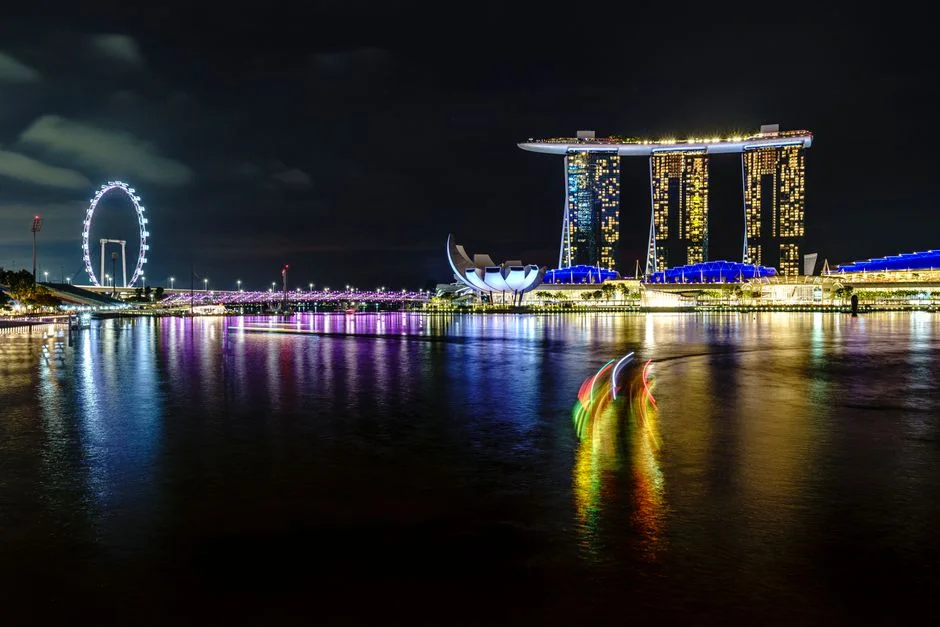
The pattern defies conventional market logic. Rather than chasing low-cost production, Singapore firms are targeting India's services sector, digital infrastructure, and consumer markets. Temasek Holdings, GIC, and a cohort of mid-sized Singapore family offices account for the bulk of commitments.
Why Synthesis Matters to Investors


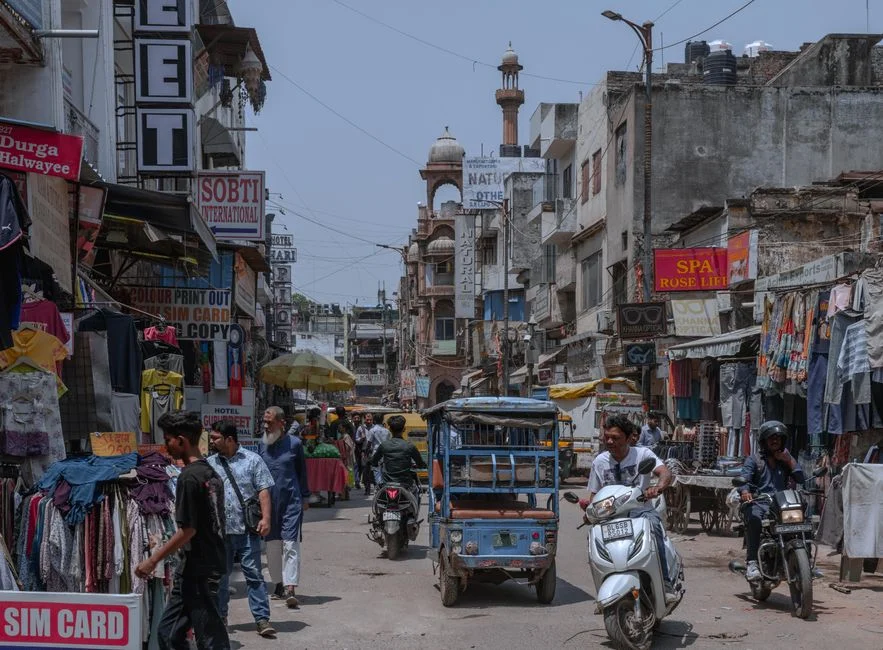
The concept of synthesis — blending disparate traditions into coherent systems — has deep roots in Indian economic thought. Historians studying the subcontinent's commercial past note that Hindu civilization never pursued isolation. Trade networks stretched from Southeast Asia to the Mediterranean centuries before European arrival. Guild systems, banking conventions, and contractual norms evolved through integration, not separation.
That historical pattern is reasserting itself in contemporary policy. India under its current economic framework combines protectionist instincts with aggressive export promotion, traditional agriculture with a booming technology sector, and state-led infrastructure spending with private enterprise. For investors, the combination creates unusual flexibility.
The Business Case for Blended Models
Singapore trading houses operating in Chennai, Mumbai, and Ahmedabad report a consistent advantage: Indian partners navigate regulatory complexity by drawing on community networks and informal credit systems alongside formal banking channels. A Singapore logistics firm with operations in Karnataka told the Business Times that relationship-based contracting reduced transaction costs by an estimated 15 to 20 percent compared with purely formal arrangements in other markets.
That observation aligns with broader research on India's dual economy. Formal sector companies contribute 85 percent of tax revenue but employ only 10 percent of the workforce, according to data from the National Statistical Office. The informal half — operating through trust, reputation, and centuries-old commercial customs — absorbs economic shocks that cripple more rigid systems.
Regional Supply Chains Adapt
The implications extend beyond bilateral investment. As Singapore firms embed themselves in India's synthesis economy, supply chains spanning the Bay of Bengal are restructuring. Singapore's position as a re-export hub for Indian goods to ASEAN markets has strengthened. Trade through the India-Singapore Comprehensive Economic Cooperation Agreement, in force since 2005 and updated in 2022, covers 90 percent of tariff lines between the two economies.
Manufacturers in Tamil Nadu supplying electronics components to Singapore assembly plants report lead times compressed by 12 days since logistics operators began using coastal shipping routes alongside air freight. The hybrid approach — marrying speed with cost efficiency — mirrors the synthesis philosophy gaining ground in boardrooms from Raffles Place to Connaught Circus.
What Singapore Investors Are Targeting
Funds flowing from Singapore into India cluster around three sectors. Infrastructure dominates, with $4.8 billion committed to port, rail, and renewable energy projects. Financial services follow at $3.1 billion, reflecting interest in India's underbanked interior markets. Technology acquisitions account for the remaining $4.4 billion, concentrated in fintech, healthtech, and agricultural technology platforms.
The technology segment reveals the synthesis thesis most clearly. Singapore-backed startups in India are building platforms that formalise informal economic activity — digitising the chit fund savings model, creating credit scores for street vendors, linking rural artisans directly to export markets. These ventures succeed because they respect existing patterns while adding efficiency.
Risks and Structural Constraints
The investment surge is not without friction. India imposes caps on foreign ownership in sectors including insurance, broadcasting, and retail. Land acquisition for industrial projects remains notoriously difficult, with state governments holding divergent interpretations of central policies. Singapore firms with projects in Punjab, Maharashtra, and Karnataka have all encountered delays tied to fragmented approval processes.
Currency volatility adds another layer. The Singapore dollar has strengthened 6 percent against the Indian rupee over 24 months, compressing returns for unhedged positions. Singapore investors who entered positions when the rupee traded at 54 to the dollar now face conversion rates near 48, a drag on realised profits.
Looking Ahead: The 2025 Horizon
Market observers tracking the trend point to two catalysts on the horizon. First, India's Union Budget for fiscal year 2025, expected in Parliament by February, will signal whether the synthesis approach receives continued policy support or shifts toward more orthodox liberalisation. Second, a proposed upgrade to the India-Singapore trade agreement, currently in preliminary negotiations, could open additional sectors including professional services and maritime logistics.
Singapore's Economic Development Board has identified India as a priority destination for outward investment promotion, scheduling three trade missions to Chennai, Hyderabad, and Kolkata before the end of the calendar year. Whether the synthesis model delivers on its promise for regional investors will become clearer as those delegations return with signed memoranda — or without them.
See Also
- Sophie Devine Inspires New Zealand to Thrilling Win Over England in Canterbury
- India's Stray Dog Crisis Triggers Hidden Economic Costs for Businesses
Financial services follow at $3.1 billion, reflecting interest in India's underbanked interior markets. Technology acquisitions account for the remaining $4.4 billion, concentrated in fintech, healthtech, and agricultural technology platforms.The technology segment reveals the synthesis thesis most clearly.
What is the latest news about singapore firms pour record capital into indias synthesis economy?
Why does this matter for technology-innovation?
What are the key facts about singapore firms pour record capital into indias synthesis economy?