China has confirmed orders for six new Generation III nuclear reactors, each rated at over 1,000 megawatts, marking the country's largest single procurement announcement in the civilian nuclear sector this year. The State Power Investment Corporation and China General Nuclear Power Group will lead construction at sites along the eastern coastline. Industry analysts say the move signals Beijing's continued preference for large-scale conventional nuclear technology over emerging small modular reactor designs.
The Scale of China's Nuclear Ambitions
The six reactors represent a combined capacity of approximately 6,600 megawatts, enough to power the equivalent of six million Singapore households. State media reported that construction permits for four of the units have already been issued, with groundbreaking scheduled for the first half of next year. The announcement came during a closed-door briefing at the National Development and Reform Commission, where officials outlined plans to add 70 gigawatts of nuclear capacity by 2035.
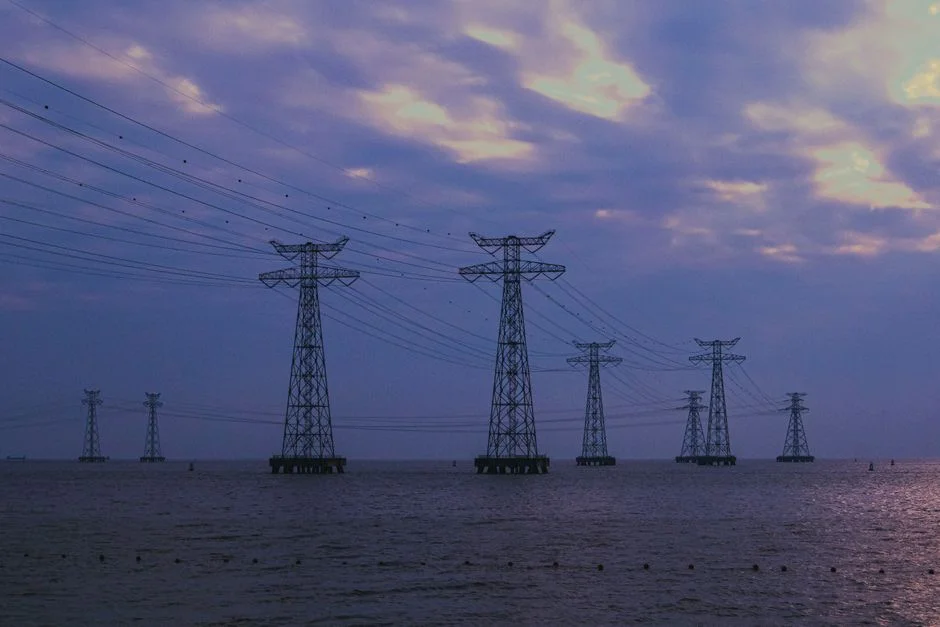
That target, if achieved, would make China the world's undisputed leader in nuclear power generation, surpassing France and the United States combined. The country currently operates 55 reactors with a total capacity of 53 gigawatts, having added more new units in the past decade than any other nation. For Singapore and other energy-importing neighbours, this expansion reshapes the regional electricity market in ways that merit close attention.
Why Beijing Prefers Scale Over Modularity


The decision to bet on large conventional reactors puzzles some Western observers, who have watched companies in North America and Europe pour resources into small modular reactors. Those designs promise factory-built components and faster deployment. China, however, appears unconvinced. Officials at the briefing noted that the country's existing fleet of large reactors has achieved capacity factors above 90 percent, a reliability record that gives planners confidence in the technology.
The economics are straightforward. China's domestic supply chain for heavy components, from reactor vessels to steam turbines, is largely self-sufficient. State-owned manufacturers can produce key equipment at scale, driving down per-unit costs in ways that small modular designs have yet to match commercially. Three reactor vendors — CGN, SPIC, and China Nuclear Power Engineering — now compete fiercely for domestic contracts, a dynamic that has accelerated innovation in construction techniques and shortened build times.
Supply Chain Advantages for Beijing
Fornebu, a Norwegian energy consultancy, estimated last month that Chinese-built nuclear islands cost roughly 40 percent less per kilowatt than comparable Western projects. That price advantage extends to maintenance, fuel services, and eventual decommissioning. It also creates an export proposition: countries seeking affordable clean energy can now look to Chinese technology rather than accept the higher costs of Western-built large reactors or the unproven economics of small modular units.
What This Means for Asian Energy Markets
Singapore does not operate nuclear reactors and has no plans to build them. Yet the city-state cannot ignore what happens across the causeway and beyond. Southeast Asia's electricity grids are increasingly interconnected, and power traded across borders already includes output from hydro dams in Laos and coal plants in Malaysia. As China adds nuclear capacity, it reduces pressure on domestic coal consumption, freeing up coal for export or displacing it entirely in regional supply chains.
The International Energy Agency projects that Asia will account for 80 percent of global nuclear growth through 2040. China sits at the centre of that projection. Regional utilities in South Korea, Japan, and Vietnam are watching Beijing's buildout carefully, even as their own nuclear programmes face political headwinds. If China's large reactors perform as expected over the next decade, they provide a working proof of concept that could revive interest in nuclear power across the region.
Investors Eye the Nuclear Supply Chain
The investment implications extend beyond utilities. Listed companies supplying precision components for reactor construction have seen their share prices climb in Shanghai and Hong Kong this quarter. Analysts at CITIC Securities noted that orders for reactor coolant pumps, containment structures, and control rod assemblies have risen sharply as the new build programme accelerates. Foreign investors with exposure to Chinese industrial firms are recalculating their exposure to the nuclear sector.
Bond markets are also adjusting. China General Nuclear Power Group issued $800 million in green bonds last month, its first such offering in two years. Proceeds will partially fund the new reactor programme. The reception from institutional investors — oversubscribed by a factor of four — signals strong appetite for nuclear-linked debt at a time when other infrastructure financing faces higher borrowing costs.
Global Competition in Nuclear Technology
China's bet on large reactors puts it on a collision course with Western vendors who have prioritised small modular designs. NuScale Power in the United States and Rolls-Royce SMR in the United Kingdom have spent years developing compact units intended to compete on flexibility and safety. Neither company has yet secured a commercial order that would demonstrate full-scale deployment. Meanwhile, Russia's Rosatom continues to market its VVER large-reactor design globally, competing with Chinese vendors in markets across Africa and the Middle East.
The competition matters for countries planning new capacity. A 1,000-megawatt reactor delivers baseload power reliably but requires significant upfront capital and site preparation. Small modular reactors promise lower initial costs and modular expansion. The outcome of China's large-reactor programme will influence which model wins favour in emerging markets seeking to decarbonise power grids without sacrificing reliability.
What Comes Next for Beijing's Nuclear Programme
Permitting timelines suggest the first of the six new reactors could achieve criticality by 2029, assuming construction proceeds without major delays. China has a track record of completing nuclear projects faster than Western countries, partly because environmental and public consultation requirements are less extensive. Whether that speed comes at the cost of safety will remain a subject of international scrutiny.
For Singapore's policymakers, the relevant question is how regional nuclear growth affects energy security calculations. The city-state imports nearly all its electricity, and any reduction in coal trade flows could alter fuel pricing across Southeast Asia. Traders at Singapore's energy exchange are already monitoring Chinese nuclear announcements for signals that could shift demand for liquefied natural gas.
Watch for the next round of site selection hearings, expected before the end of the year. If Beijing approves additional locations beyond the eastern coastline, the scale of China's nuclear programme will extend into regions closer to Southeast Asia, raising stakes for cross-border electricity planning.
See Also
- India Slips to Seventh in Global Market Cap — South Korea Takes Sixth
- China Secures 300 US Jets — Tariff Reductions Prompt Market Optimism
What Comes Next for Beijing's Nuclear Programme Permitting timelines suggest the first of the six new reactors could achieve criticality by 2029, assuming construction proceeds without major delays. Analysts at CITIC Securities noted that orders for reactor coolant pumps, containment structures, and control rod assemblies have risen sharply as the new build programme accelerates.
What is the latest news about china orders six new gigawattscale nuclear reactors and the energy world is watching?
Why does this matter for sports?
What are the key facts about china orders six new gigawattscale nuclear reactors and the energy world is watching?