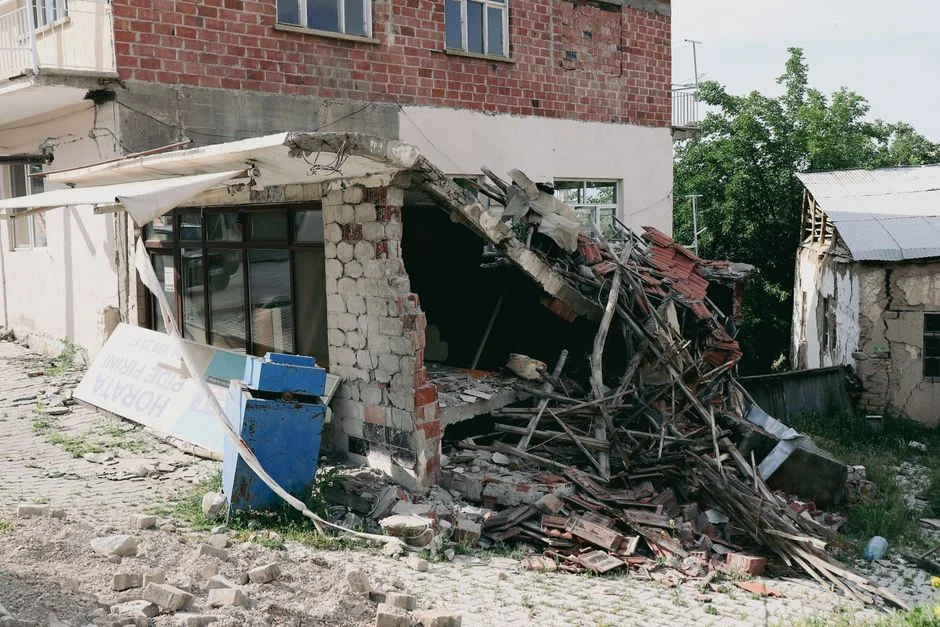
Schoolchildren ran for their lives in Digos on Monday when a magnitude 5.3 earthquake struck southern Philippines, causing a school roof to buckle and collapse as the ground heaved beneath classrooms. Officials confirmed the tremor rattled Davao del Sur province at approximately 9:00 AM local time, sending pupils scattering from the affected building. No casualties were reported, but the incident has reignited scrutiny over school infrastructure standards across the earthquake-prone archipelago.
Panic and Flight
Witnesses described chaos as the roof gave way mid-shake. One teacher told local media the children had barely cleared the classroom when a section of the ceiling crashed down onto desks and chairs. Rescue teams arrived within 20 minutes, though officials said no students required hospital treatment. The Philippine Institute of Volcanology and Seismology recorded the epicentre at a shallow depth of 10 kilometres, amplifying the ground motion felt across Digos and surrounding municipalities.
Seismic Context


The Philippines sits along the Pacific Ring of Fire, a horseshoe-shaped belt of volcanic arcs and oceanic trenches that generates roughly 90 percent of the world's earthquakes. Davao del Sur has experienced several significant tremors in recent years, including a magnitude 6.6 quake in 2019 that killed at least nine people and damaged hundreds of homes. Monday's 5.3 event, while moderate in strength, struck during school hours when classrooms were fully occupied.
Infrastructure Under the Microscope
The Department of Education immediately dispatched inspectors to assess the damaged school and nearby buildings. Secretary Juan Eduage ordered a nationwide audit of school structures in seismic high-risk zones, with priority given to facilities built before modern building codes took effect. The government has allocated roughly 45 billion pesos for school reconstruction since 2017, yet advocacy groups estimate thousands of classrooms remain vulnerable to collapse during strong tremors.
Financial Implications for Construction Sector
The renewed focus on school safety standards carries direct consequences for Philippine construction firms and building material suppliers. Shares in several listed construction companies rose modestly on Tuesday, with analysts suggesting increased government spending on retrofits and new classroom builds could flow to the sector within the next budget cycle. Insurance firms also face potential exposure: Philippine property policies typically exclude earthquake damage unless a separate rider is purchased, but regulators are reviewing whether schools receiving public funds should require mandatory quake coverage.
Singapore Market Ripples
For Singaporean investors with exposure to Philippine equities, Monday's quake adds another data point to a complex picture. The PSEi index has struggled in recent months amid domestic inflation concerns, and natural disasters periodically dent consumer confidence in affected regions. Singapore-based fund managers tracking Asean markets noted that infrastructure resilience has become a recurring theme in emerging-market due diligence. Two Singaporean sovereign funds have direct stakes in Philippine property developers with significant educational facility portfolios.
Broader Economic Toll
Beyond the immediate human drama, earthquakes impose measurable costs on regional economies. The 2019 Mindanao quakes caused an estimated 3.1 billion pesos in damage to schools, roads, and bridges, temporarily disrupting supply chains in Davao del Sur. Monday's tremor appears far less destructive, but economists will watch retail activity in Digos over the coming weeks as parents reassess sending children to schools perceived as unsafe. Small businesses near the affected school reported temporary closures on Monday afternoon while emergency services operated in the area.
Relief and Recovery Operations
The Office of Civil Defence coordinated rescue and relief efforts, distributing emergency supplies to affected families by late afternoon. The National Disaster Risk Reduction and Management Council activated response protocols within the first hour of the quake. Regional military units deployed personnel to assist with search-and-assessment operations, while local government units opened evacuation centres as a precautionary measure. Officials expect school damage assessments to conclude within 72 hours.
What Comes Next
The Department of Education faces pressure to release its nationwide school audit results before the next academic year begins in June. Parliamentarians have already announced plans to summon department officials for questioning on school seismic safety funding shortfalls. For investors, the episode underscores a broader theme: infrastructure resilience is increasingly priced into emerging-market valuations, and governments that fail to address glaring gaps risk credit-rating downgrades. Watch for the audit report's release date and any subsequent government spending announcements for school reconstruction programmes.
See Also
- Malaysia's Aaron-Wooi Yik Falls to Chinese Pair in Singapore Open Badminton Drama
- Air India Crash Anniversary: One Year On, Families Ask What Closure Looks Like
The PSEi index has struggled in recent months amid domestic inflation concerns, and natural disasters periodically dent consumer confidence in affected regions. Singapore-based fund managers tracking Asean markets noted that infrastructure resilience has become a recurring theme in emerging-market due diligence.