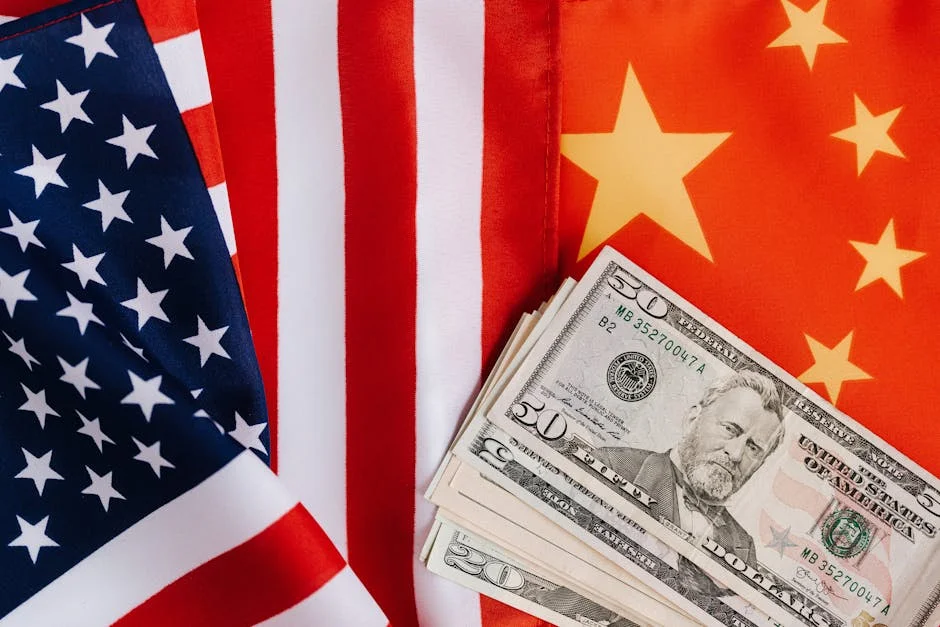
Donald Trump has explicitly framed the sale of US military hardware to Taiwan as a primary lever in his ongoing trade negotiations with Beijing. This strategic pivot transforms a long-standing diplomatic relationship into a direct economic bargaining chip, sending immediate ripples through global equity markets. Investors in Singapore and across Asia are now recalibrating risk models to account for the potential for sudden tariff hikes or supply chain disruptions.
Strategic Shift in US Trade Policy
The Trump administration has moved away from the traditional consensus-based approach to Taiwan relations, opting instead for a transactional model. Under this framework, the $50 billion in pending arms sales, including F-35 jets and Patriot missile systems, are no longer just about deterrence. They are now viewed as currency to extract concessions on Chinese electric vehicles and semiconductors.

This shift creates immediate uncertainty for multinational corporations. Companies that rely on the smooth flow of goods between Shanghai and New York face the prospect of retroactive tariffs. The market reaction was swift, with the Hang Seng Index dipping as traders priced in the risk of a renewed trade war. Singaporean investors, who hold significant exposure to both US tech and Chinese manufacturing, are now facing a complex hedging environment.
Analysts at major financial institutions in Singapore are warning that this strategy introduces volatility that is difficult to quantify. The link between geopolitical maneuvering and daily market performance has never been more direct. Businesses must now prepare for scenarios where diplomatic talks stall, triggering immediate economic penalties.
Impact on Supply Chains and Manufacturing


The potential disruption to supply chains is the most tangible economic consequence of this policy shift. Taiwan is a critical node in the global semiconductor industry, producing nearly 60% of the world's chips. Any escalation in tensions could lead to logistics bottlenecks, affecting everything from smartphones to automotive production.
Manufacturers in Southeast Asia, particularly in Vietnam and Malaysia, are already feeling the pressure. They are being forced to accelerate their "China Plus One" strategies to diversify production away from potential flashpoints. This migration requires significant capital expenditure, which impacts profit margins in the short term. However, it also presents an opportunity for regional economies to capture a larger share of global manufacturing output.
Logistics companies are also bracing for increased freight rates. If the Taiwan Strait becomes a more contested zone, insurance premiums for shipping vessels will rise. This cost will inevitably be passed down to consumers, contributing to inflationary pressures in major markets like Singapore and Japan. The ripple effect extends to retail sectors, where price sensitivity is already high.
Regional Economic Vulnerabilities
For Singapore, the stakes are particularly high due to its dual role as a trading hub and a financial center. The city-state’s export-oriented economy is sensitive to fluctuations in both US and Chinese demand. A prolonged standoff could dampen export growth, affecting key sectors such as electronics and petrochemicals. The Monetary Authority of Singapore may need to intervene in the foreign exchange market to stabilize the Singapore Dollar against volatility.
Other regional economies are not immune to these shocks. Thailand and Indonesia, which have deep economic ties with both the US and China, face the risk of being caught in the crossfire. Their currencies could experience increased volatility as investors seek safe-haven assets. This environment makes it harder for central banks in the region to manage interest rates and control inflation.
Investor Sentiment and Market Volatility
Global investors are responding to the news with a mix of caution and opportunism. The US stock market has seen increased trading volumes in defense contractors and semiconductor firms. Companies like Lockheed Martin and TSMC are seeing their valuations adjust based on the perceived likelihood of arms deals and production stability. This sector-specific movement highlights the direct link between policy decisions and stock performance.
In Asia, the Korean Won and the Japanese Yen have shown signs of stress. These currencies often move in tandem with global risk appetite. As the US-China relationship becomes more transactional and less predictable, investors are pulling back from emerging market assets. This capital flight can lead to liquidity crunches in smaller economies that rely on foreign investment.
Hedge funds are increasing their positions in volatility indices, betting on continued market swings. The VIX, often referred to as the "fear gauge," has ticked upward, reflecting the uncertainty surrounding the negotiations. For long-term investors, this environment demands a more defensive portfolio strategy, with a greater emphasis on dividend-paying stocks and fixed-income securities.
Business Strategy and Corporate Response
Corporations are rapidly adjusting their strategies to mitigate the risks associated with this geopolitical shift. Many are conducting stress tests to see how their bottom lines would fare under a worst-case scenario involving a Taiwan trade embargo. These exercises are revealing vulnerabilities in just-in-time inventory models that have served companies well for decades.
Supply chain diversification is no longer a buzzword but a survival tactic. Companies are investing in near-shoring and friend-shoring initiatives to reduce their reliance on single-source suppliers. This involves building new factories in countries with stable political environments and favorable trade agreements. While this increases upfront costs, it provides a buffer against sudden geopolitical shocks.
Corporate governance boards are also paying closer attention to geopolitical risk management. Chief Executive Officers are being asked to provide more detailed briefings on how global tensions could impact quarterly earnings. This increased scrutiny is leading to more conservative guidance and a focus on cash flow preservation. Shareholders are rewarding companies that demonstrate agility and strategic foresight.
Economic Data and Market Indicators
Economic data from the region reflects the growing anxiety. Trade volumes between the US and China have shown signs of fluctuation, with imports of Chinese electronics dipping slightly in recent months. This trend could accelerate if the arms sales are used as a leverage point for broader trade concessions. The data suggests that businesses are already beginning to adjust their ordering patterns in anticipation of potential disruptions.
Inflation figures in key Asian economies are also under scrutiny. Any increase in freight costs or raw material prices could push consumer price indices higher. Central banks will need to balance the need to control inflation with the desire to stimulate growth. This delicate balancing act could lead to interest rate adjustments that impact mortgage holders and business borrowers across the region.
The bond market is also reacting to the geopolitical uncertainty. Yields on government bonds in the US and China have shown volatility, reflecting shifts in investor sentiment. This movement affects borrowing costs for governments and corporations alike. Lower yields can stimulate investment, while higher yields can cool down an overheating economy. The interplay between these factors will be closely watched by economists and policymakers.
Future Outlook and Key Watchpoints
The coming weeks will be critical in determining the long-term impact of this strategic move. Investors should closely monitor official statements from the US Trade Representative and the Chinese Ministry of Commerce. Any concrete announcements regarding tariffs or trade quotas will have an immediate effect on market sentiment. The timing of the finalization of the Taiwan arms deal will also be a key indicator of the pace of negotiations.
Markets will remain sensitive to any diplomatic breakthroughs or setbacks. A sudden announcement could lead to sharp rallies or sell-offs in specific sectors. Investors should stay informed and be prepared to adjust their portfolios accordingly. The interplay between geopolitics and economics is becoming increasingly complex, requiring a nuanced understanding of global dynamics. Keeping an eye on the Singapore Dollar and regional equity indices will provide valuable insights into market sentiment.
See Also
- GOP Senators Push for Off-Ramp to End Warsh Fed Nomination Standoff
- Twitter India Head Francisco Departs — Market Uncertainty Grows
Future Outlook and Key Watchpoints The coming weeks will be critical in determining the long-term impact of this strategic move. Economic Data and Market Indicators Economic data from the region reflects the growing anxiety.