The National University of Singapore has appointed its first chief executive for the newly established Institute of Nuclear Energy, marking a strategic pivot in the island city-state's approach to decarbonisation. This leadership change signals a move away from theoretical modelling towards a pragmatic assessment of nuclear energy's viability within Singapore's constrained geography and economic landscape. The appointment comes at a critical juncture where global energy prices remain volatile, forcing local businesses to scrutinise their long-term power costs.
Strategic Shift in Singapore's Energy Mix
Singapore's reliance on imported energy has long been a vulnerability for its economic resilience. The nation imports approximately 95 per cent of its energy needs, primarily liquefied natural gas (LNG), which exposes domestic industries to fluctuating global commodity prices. The establishment of the Institute of Nuclear Energy under the National University of Singapore represents a concerted effort to diversify this portfolio. It is not merely an academic exercise but a strategic economic intervention designed to future-proof the city-state's power grid.
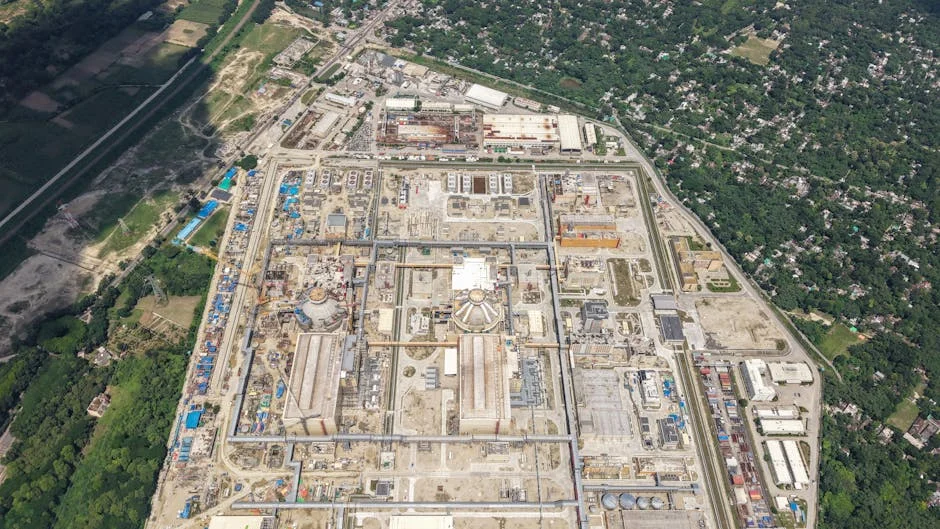
The new leadership team is tasked with evaluating the realistic challenges of integrating nuclear power into a dense urban environment. This involves more than just technological feasibility; it requires a deep dive into the financial implications for businesses and consumers. Investors are watching closely to see if nuclear energy can offer a stable, long-term price anchor compared to the volatility of the LNG market. The stakes are high for Singapore's manufacturing and financial sectors, which depend on predictable energy costs to maintain global competitiveness.
Economic Implications for Local Businesses


For Singaporean enterprises, the transition to nuclear energy presents both opportunities and immediate financial risks. The initial capital expenditure required for nuclear infrastructure is significantly higher than that for traditional gas-fired plants. This means that in the short to medium term, businesses may face higher tariffs or government subsidies funded by fiscal reserves. Companies in energy-intensive sectors, such as petrochemicals and data centres, are already modelling these potential cost structures into their five-year financial forecasts.
However, the long-term economic argument for nuclear power rests on price stability. Unlike gas, which is subject to sudden geopolitical shocks and supply chain disruptions, nuclear fuel costs are relatively predictable over decades. This stability can provide a competitive advantage for Singaporean exporters who need to hedge against energy inflation. The National University of Singapore's institute will play a crucial role in quantifying these savings, providing data-driven insights that can influence corporate investment decisions across the economy.
Investor Confidence and Market Reaction
The financial markets have responded cautiously to the news, reflecting the long gestation period of nuclear projects. Equity analysts note that while the long-term outlook for energy stability is positive, the immediate impact on corporate earnings may be neutral to slightly negative due to upfront costs. Investors are particularly interested in how the government plans to fund the initial phase of the nuclear initiative, whether through sovereign wealth funds or public-private partnerships. This funding mechanism will determine the burden placed on the taxpayer and the broader economy.
Bond markets may also see subtle shifts as Singapore issues green or blue bonds to finance the transition. The credibility of these financial instruments will depend heavily on the rigorous assessment provided by the NUS institute. If the institute can demonstrate a clear path to cost-effective nuclear deployment, it could enhance Singapore's creditworthiness in the global green finance market. This would attract foreign direct investment from multinational corporations seeking a low-carbon, stable energy environment for their regional headquarters.
Technological and Spatial Constraints
Singapore's small land area poses a unique challenge for nuclear energy adoption. The choice of technology is critical, with small modular reactors (SMRs) emerging as the most viable option for the city-state. These reactors are smaller than traditional units, allowing them to be installed in more compact spaces, such as the Jurong Island industrial estate or even offshore platforms. The National University of Singapore will lead the technical evaluation of these SMRs, focusing on safety, efficiency, and land-use optimisation.
The spatial constraint also influences the supply chain dynamics for the nuclear industry. Local businesses will have opportunities in engineering, construction, and maintenance services. This could spur the growth of a niche domestic industry, creating high-value jobs for Singaporean engineers and technicians. The institute's research will help identify these economic spill-over effects, guiding policy decisions on local content requirements and workforce development. This industrial policy angle is crucial for maximising the economic return on investment in nuclear energy.
Policy Framework and Regulatory Landscape
A robust regulatory framework is essential to ensure public trust and economic efficiency in the nuclear sector. The Energy Market Authority of Singapore will need to collaborate closely with the NUS institute to develop standards that balance safety with cost-effectiveness. This includes establishing clear guidelines for waste management, decommissioning costs, and liability allocation. Uncertainty in these areas can deter private investment, so clarity is paramount for market confidence.
The policy environment must also address the social licence to operate for nuclear power. Public perception plays a significant role in the economic viability of any energy project. The institute's role in communicating the realistic benefits and risks of nuclear energy is therefore critical. Transparent communication can help mitigate political risks, which are often priced into the cost of capital for nuclear projects. A stable policy framework will reduce these risks, making nuclear energy more attractive to investors and lenders.
Global Context and Regional Competition
Singapore's move towards nuclear energy does not occur in a vacuum. Neighbouring countries like Thailand and the Philippines are also exploring nuclear options to secure their energy futures. This regional competition creates both opportunities and pressures for Singapore. Being an early adopter could position Singapore as a regional hub for nuclear technology and expertise, attracting foreign investment and talent. However, falling behind could mean losing out on first-mover advantages in the emerging green economy.
Global energy trends also influence Singapore's strategy. As the world shifts towards net-zero emissions, carbon pricing mechanisms are becoming more prevalent. Singapore's Carbon Pricing Mechanism, which currently sets a price per tonne of CO2 equivalent, will likely rise over the next decade. Nuclear energy, with its low carbon footprint, offers a hedge against these rising carbon costs. The NUS institute will model these future carbon prices to determine the economic tipping point where nuclear becomes cheaper than gas.
Future Outlook and Key Milestones
The next five years will be critical for the success of Singapore's nuclear energy initiative. The National University of Singapore's institute will publish its first comprehensive assessment report within the next 18 months, outlining the technical and economic feasibility of SMRs. This report will serve as a foundational document for government policy and private sector investment decisions. Stakeholders should monitor these findings closely, as they will shape the energy landscape for the next three decades.
Investors and businesses should prepare for a gradual transition rather than an overnight shift. The integration of nuclear power will likely begin with pilot projects and hybrid systems before scaling up to full-blown nuclear plants. This phased approach allows for risk management and learning curves. Keeping an eye on the regulatory updates and funding announcements from the Energy Market Authority will provide early signals of the pace and direction of this transition. The economic implications will unfold over time, rewarding those who plan strategically for a diversified energy future.
See Also
- Africa's Quiet Yuan Shift Triggers Major Market Realignment
- China's PL-15 Missile Downed Rafale Jets — Is PL-16 Even Deadlier?