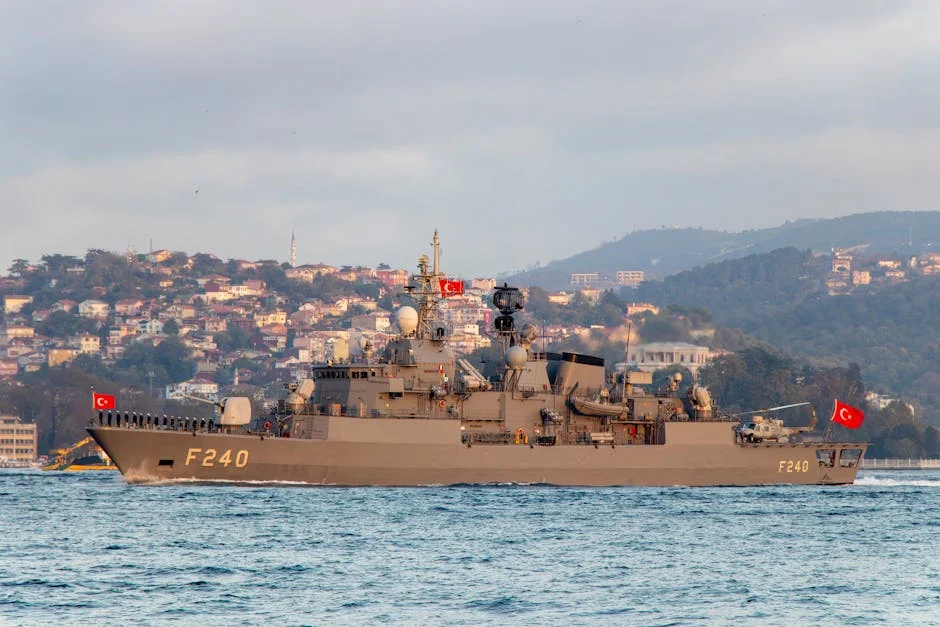
Iran has officially reopened the Strait of Hormuz, a critical maritime chokepoint, after a two-week closure that had raised global energy security concerns. The move came as President Donald Trump announced a new trade agreement with Gulf states, easing tensions that had spiked earlier this month. The reopening has sent shockwaves through global markets, with oil prices surging 8% within hours of the announcement.
Strait of Hormuz Reopens Amid Diplomatic Shift
The Strait of Hormuz, through which nearly 20% of the world’s oil supply passes, was closed by Iran on March 15 following a dispute over shipping lanes and international sanctions. The closure triggered a spike in crude oil prices, with Brent crude hitting $78 a barrel. On March 27, the Iranian Ministry of Energy confirmed the waterway was fully operational again, citing improved diplomatic relations with the United Arab Emirates and Saudi Arabia.
The decision to reopen the strait coincided with President Donald Trump’s visit to the region, where he signed a $25 billion trade deal with Gulf Cooperation Council (GCC) nations. The agreement includes increased American oil exports to the region and a commitment to reduce reliance on Iranian energy. Trump called the deal a “game-changer” for regional stability, though some analysts remain skeptical about its long-term impact.
Market Reactions and Investor Sentiment


Oil markets reacted swiftly to the news, with Brent crude falling 4% by midday on March 28 as traders anticipated a return to normalcy. However, the initial surge of 8% highlighted the fragility of global energy markets. The volatility underscored the extent to which geopolitical tensions can influence oil prices, with investors closely monitoring any further disruptions.
Stock markets in Singapore and Hong Kong also saw mixed reactions. The Straits Times Index (STI) rose 1.2% as investors took comfort from the easing of supply fears, while the Hang Seng Index dipped 0.6% due to concerns over the broader U.S.-China trade war. Analysts at DBS Bank noted that the Strait of Hormuz situation has become a key risk factor for global commodity prices, particularly for Asian economies reliant on oil imports.
Business Implications for Energy and Shipping Sectors
The closure of the Strait of Hormuz had already caused significant disruptions for shipping companies, with several vessels rerouting through the Gulf of Oman, adding days to delivery times and increasing fuel costs. With the strait now open, companies like Maersk and CMA CGM are expected to resume direct routes, reducing logistics costs and improving supply chain efficiency.
Energy firms, however, remain cautious. The International Energy Agency (IEA) warned that the incident highlights the vulnerability of global oil supply chains, particularly in the Middle East. “While the Strait of Hormuz is now open, the incident serves as a stark reminder of how easily geopolitical tensions can disrupt the global economy,” said IEA spokesperson Fatih Birol.
Investor Outlook and Regional Economic Impact
Investors are now watching closely for signs of further instability in the region. The U.S. and Iran have not resolved their broader disputes, and the Strait of Hormuz remains a potential flashpoint. In Singapore, where energy and shipping are key sectors, the government has urged businesses to diversify supply routes and strengthen energy security measures.
For investors, the event has underscored the importance of geopolitical risk in portfolio management. “We’re seeing increased interest in hedging strategies, particularly for oil and shipping stocks,” said Singapore-based fund manager David Lim. “The Strait of Hormuz situation is a reminder that global markets are highly sensitive to regional conflicts.”
Long-Term Economic Consequences
The incident has also sparked renewed discussions about energy diversification in Asia. Countries like Japan and South Korea, which rely heavily on oil imports, are considering alternative energy sources and partnerships to reduce exposure to regional conflicts. Meanwhile, the U.S. has accelerated its efforts to expand oil exports to Asia, positioning itself as a more reliable energy supplier.
For the global economy, the Strait of Hormuz episode highlights the interconnectedness of geopolitics and markets. Any further disruptions could trigger another wave of volatility, particularly in emerging markets that depend on stable energy prices. As such, economic planners and investors are preparing for a more uncertain energy landscape in the coming months.
The next key development to watch is the U.S.-Iran nuclear deal negotiations, set to resume in April. Any breakthrough or setback could once again impact oil prices and regional stability. For now, the reopening of the Strait of Hormuz offers a temporary reprieve, but the underlying tensions remain unresolved.
See Also
- Australia Launches Battery Initiative — Europe Watches Energy Costs Soar
- Opposition's No-Confidence Motion Against Lok Sabha Speaker Slammed Down By Voice Vote
The International Energy Agency (IEA) warned that the incident highlights the vulnerability of global oil supply chains, particularly in the Middle East. Investor Outlook and Regional Economic Impact Investors are now watching closely for signs of further instability in the region.