When executives in Singapore plan a business trip to Tokyo or Paris, they board a high-speed train that whisks them to their destination in comfort and on time. In America, that same executive faces a different reality: aging Amtrak routes, crowded corridors, and a flagship Acela that rarely hits its promised speeds. This gap is not merely a travel inconvenience. It represents a multibillion-dollar economic disadvantage that investors and multinational companies can no longer ignore.
The Infrastructure Gap in Numbers
China operates the world's largest high-speed rail network, stretching beyond 42,000 kilometres. Japan opened its first Shinkansen line in 1964 and now runs hundreds of daily services across the archipelago. France launched the TGV in 1981 and has since woven high-speed connections across Western Europe. The United States, by contrast, has approximately 735 kilometres of lines that qualify as genuine high-speed rail, and even those operate well below their intended velocities.
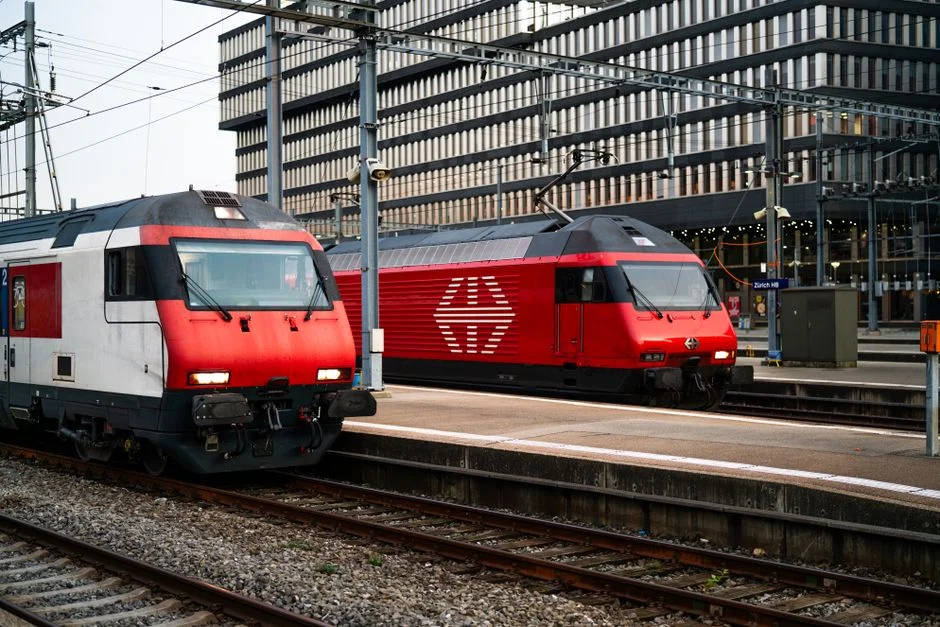
The Acela Express, running between Washington, New York, and Boston, covers roughly 730 kilometres in about seven hours. The same journey by rail in Japan or France takes half that time. Europeans frequently cite this disparity when debating transatlantic economic competitiveness. For Singapore-based firms with operations or partnerships in America, the implication is clear: logistics costs, employee productivity, and meeting schedules all suffer.
Why the United States Fell Behind


Federal subsidies for passenger rail have historically been modest and inconsistent. Congress typically authorises funding in bursts tied to political cycles, leaving state governments and Amtrak to patch together expansion plans over decades. Private investment has stayed limited because returns on rail infrastructure are slow and politically exposed.
Land acquisition in the United States poses another challenge. Dense corridors where high-speed rail makes most economic sense—California's coast, the Northeast megalopolis, the Great Lakes region—are already built out. Eminent domain battles, environmental reviews, and litigation can delay projects for years. California voters approved a high-speed rail link between San Francisco and Los Angeles in 2008 with a projected cost of $33 billion. Adjusted estimates now place the price tag above $100 billion, and the target date for partial operation has slipped repeatedly.
Political and Regulatory Headwinds
The United States lacks a coherent national rail policy. Administrations change priorities, and funding streams shift accordingly. The Obama administration pushed high-speed rail as a signature initiative. The subsequent administration attempted to zero out related funding. This stop-start pattern makes it nearly impossible to maintain the consistent capital programmes that built Japan's and France's networks over forty or fifty years.
The Economic Stakes for Businesses and Investors
The consequences ripple through the economy in ways that show up in trade data and corporate logistics budgets. A 2023 study by the American Society of Civil Engineers estimated that traffic congestion from inadequate rail and public transit costs the US economy roughly $87 billion annually in lost productivity. For Singapore companies exporting services or operating supply chains tied to American manufacturing hubs, delays translate into inventory carrying costs and missed delivery windows.
Institutional investors hunting for infrastructure assets see the deficit as an opportunity. Private equity firms and sovereign wealth funds have approached American rail projects with interest but demand clearer regulatory pathways and revenue guarantees than Washington has been willing to provide. The Brightline West project, connecting Las Vegas to Southern California with private capital, attracted some international backing but still required federal grants to reach financial close.
Singapore's Position in the Comparison
Singapore itself does not have a high-speed rail link, though the proposed Kuala Lumpur–Singapore line would compress the journey between the two cities to 90 minutes. Malaysia and Singapore have signed agreements on the project, though timelines have shifted due to pandemic-era disruptions and bilateral negotiations. Singapore's land transport authority has maintained technical standards compatible with high-speed operations, preserving the option for future implementation.
For Singaporean investors, the American rail story carries a cautionary lesson. Heavy infrastructure requires sustained government commitment, clear regulatory frameworks, and patient capital. The countries that built world-class rail networks did so through multi-decade programmes backed by cross-party consensus. The United States has struggled to achieve that consensus, leaving its rail ambitions perpetually on the drawing board.
What Comes Next
The Biden administration allocated significant funding for passenger rail through the Infrastructure Investment and Jobs Act of 2021, channeling roughly $66 billion into Amtrak and rail grants. That money is beginning to flow into track upgrades and new equipment, but genuine high-speed corridors remain on the drawing board in most regions. The Northeast Corridor, the most heavily travelled rail route in the United States, is receiving attention, yet even that project involves incremental improvements rather than a transformational build.
Watch for developments in California and the Texas Triangle, where private consortia continue exploring high-speed connections between major metros. If either project reaches financial close with international partners, it could signal a shift in how the United States approaches rail investment. Until then, the gap between American rail and its Asian and European counterparts will persist, compounding economic costs and testing the patience of businesses that rely on efficient ground transportation.
See Also
- Singapore Family Discovers Rare Spherical Egg — Impacts Local Market Curiosity
- Caning Bullies: Economic Cost of Child Discipline Debate
What Comes Next The Biden administration allocated significant funding for passenger rail through the Infrastructure Investment and Jobs Act of 2021, channeling roughly $66 billion into Amtrak and rail grants. Watch for developments in California and the Texas Triangle, where private consortia continue exploring high-speed connections between major metros.