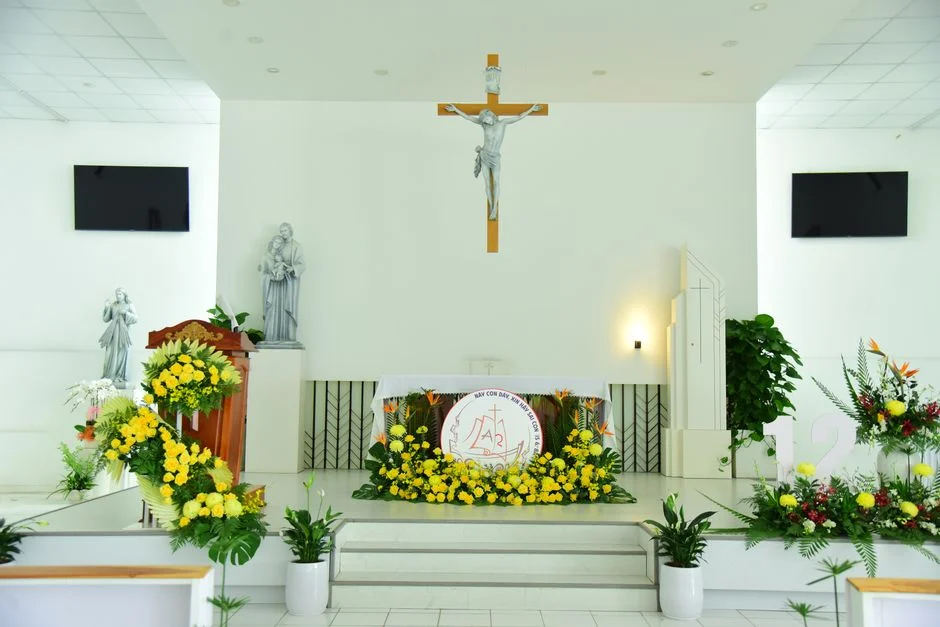
A papal envoy celebrated Vietnam's first beatification rite in Ho Chi Minh City on Saturday, marking a significant milestone in the Catholic Church's presence in the Southeast Asian nation. The ceremony honoured 87 Vietnamese martyrs who died during the 17th and 18th centuries, drawing thousands of faithful to the Notre-Dame Cathedral Basilica. Cardinal Pierre Bastit Bonheur, acting on behalf of Pope Francis, led the open-air Mass in the city's historic district, an event decades in the making.
A Breakthrough Decades in the Making
Vietnam has not hosted a beatification ceremony since the Communist government took power in 1975. Negotiations between the Vatican and Hanoi stretched across multiple years, with the process requiring careful navigation of church-state relations. The ceremony represents the culmination of a petition first submitted to the Vatican decades ago. Religious freedom advocates have long called for such gestures, arguing that recognising Vietnam's Catholic heritage strengthens the country's standing in international forums.
What This Means for Vietnam's Business Environment
International investors typically weigh a country's treatment of religious minorities when assessing long-term stability. Vietnam, a manufacturing hub attracting billions in foreign direct investment annually, has faced periodic criticism over restrictions on religious practice. Saturday's ceremony signals a willingness to accommodate religious expression within the state-controlled framework. That matters for companies with operations in Vietnam, particularly those headquartered in nations where religious liberty carries significant political weight.
Investment Climate Implications
The beatification ceremony could influence decisions by Western multinational corporations reviewing their supply chain exposure in Vietnam. Several major firms have cited human rights conditions, including religious freedom, in their investment committee deliberations. A warmer church-state dynamic may ease some concerns among corporate boards in Europe and North America. Vietnam competes with countries like Bangladesh and Myanmar for labour-intensive manufacturing investment, and any factor improving its reputation carries weight.
Catholic Economic Networks in Asia
Catholic institutions manage substantial investment funds and development capital worldwide. Vietnam's improved standing with the Vatican opens potential channels for financing infrastructure projects through church-affiliated lenders. The Knights of Columbus and other Catholic charitable foundations have previously funded projects in countries demonstrating commitment to religious liberty. Such connections rarely produce immediate results, but they create long-term pathways for development finance that traditional investors may not offer.
The Regional Diplomatic Picture
Vietnam's move comes as several Asian nations reassess their approaches to religious institutions. China and the Vatican have held sporadic talks regarding bishop appointments for years, though no formal breakthrough has emerged. Vietnam's relative openness on this occasion positions it differently in Vatican calculations. Regional competitors watching the process include Indonesia and the Philippines, both nations with substantial Catholic populations. The diplomatic capital Vietnam gains here extends beyond religious affairs.
Domestic Political Calculations
Vietnamese authorities have maintained strict control over religious activities since reunification, requiring official registration for congregations and monitoring sermons. Saturday's ceremony occurred with government approval, reflecting a calculated effort to demonstrate tolerance while preserving existing governance structures. The ceremony took place in Ho Chi Minh City, formerly Saigon, where the Catholic community represents a significant demographic and economic force. Local business leaders with Catholic backgrounds attended the Mass, according to attendees.
What Comes Next
The Vatican indicated that additional steps toward establishing formal diplomatic relations remain under discussion. Neither side has announced a timeline for exchanging ambassadors, though observers in diplomatic circles view Saturday's event as a precursor to such a move. Vietnam's government has signalled interest in expanding tourism infrastructure, including pilgrimage routes connecting Catholic sites across the country. The Ministry of Culture has previously indicated openness to developing religious tourism as a revenue source.
Watch for Vatican officials to signal whether a bilateral agreement on religious affairs will follow. The next few months may clarify whether Saturday's ceremony represents a one-time gesture or the start of a broader normalisation process with implications for Vietnam's international economic partnerships.
See Also
- Venezuela's WBC Victory Sparks Market Shifts in Miami and Caracas
- Miami Grand Prix Surges in Value — Why This Race Is A Goldmine