Germany announced plans to inject €100 billion into its armed forces, while Japan signalled the most dramatic shift in its security posture since 1945. The two nations that once defined wartime aggression are now pivoting toward military buildup at a pace that global investors cannot ignore.
Berlin Drops Post-War Constraints
For eight decades, Germany kept its military deliberately modest, a deliberate thumb in the eye of its Nazi past. That era ended on Thursday when Chancellor Friedrich Merz confirmed the special defense fund. The announcement upends a bedrock assumption of European security: that Germany leads with its wallet, not its army.
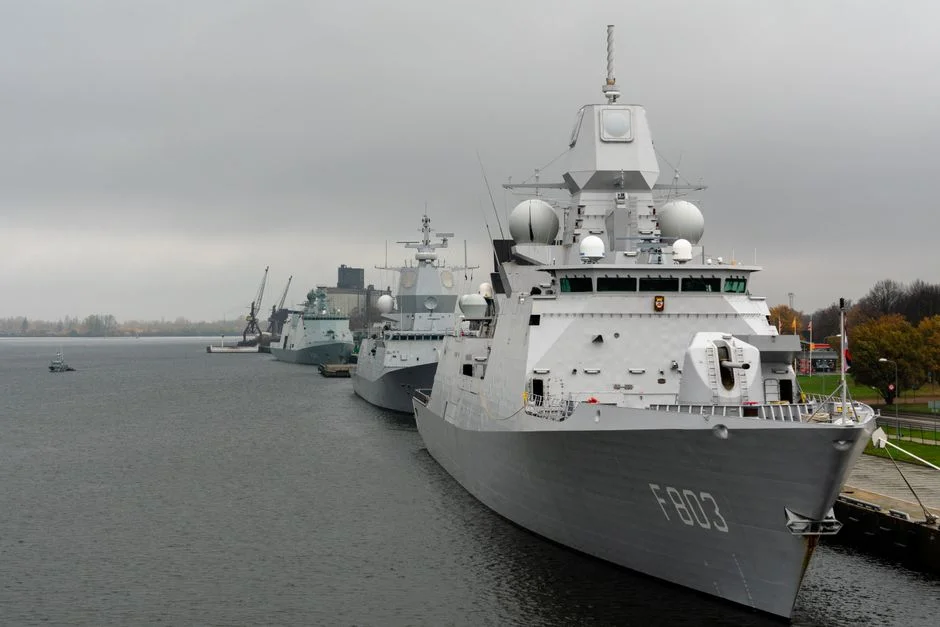
The fund will cover new equipment purchases, infrastructure upgrades, and recruitment drives. Defense analysts at Goldman Sachs in London estimate the package could push German defense spending to 3% of GDP within three years, well above the NATO baseline of 2%.
Tokyo Moves Beyond the Constitution


Japan approved a record ¥57 trillion defense budget over five years, marking a clean break from its pacifist constitution written by American occupiers in 1947. The spending plan includes anti-ship missiles, upgraded F-35 squadrons, and a new command structure designed to strike enemy launch sites.
Prime Minister Shigeru Ishiba described the buildup as necessary given threats from North Korea and an increasingly assertive China in the East China Sea. Japanese defense officials told reporters in Tokyo that the country can no longer rely solely on American protection.
Economic Ripples Across the Pacific
The timing matters for markets. Japan and Germany are the third and fourth-largest economies on the planet. Their simultaneous pivot means demand for military hardware, steel, electronics, and cybersecurity services will spike in ways that reorient global supply chains. Countries that supply rare earth minerals or precision components stand to benefit directly.
South Korea, a key US ally with a robust defense industry, is watching closely. Samsung C&T and Hanwha Aerospace could see expanded contracts as regional partnerships tighten. Taiwan, perpetually in China's shadow, may find itself courted by both Tokyo and Berlin as a democratic partner in the Indo-Pacific.
Defense Contractors See a Boom Cycle
Lockheed Martin, Northrop Grumman, and BAE Systems all saw their share prices climb in after-hours trading on Thursday. The logic is straightforward: when two G7 economies start spending big, prime contractors win contracts worth billions. Smaller firms in the supply chain—makers of targeting systems, armour plating, and communications equipment—will feel the uplift next.
Rheinmetall, the German arms maker based in Düsseldorf, saw its stock jump 8% in early Frankfurt trading. The company has been expanding production capacity for artillery ammunition and Leopard tank components since Russia's invasion of Ukraine. Japan Marine United, a shipbuilder in Yokohama, could benefit from contracts to build patrol vessels for the Japan Coast Guard.
What This Costs—and Who Pays
Defense spending is not free money. Germany will likely issue new sovereign debt to fund the €100 billion, adding to an already strained federal budget. Japan faces the same arithmetic: higher borrowing costs mean less fiscal room for an aging population's pension and healthcare bills.
Central banks are watching too. If both economies run larger deficits while expanding military procurement, the inflationary pressure could complicate rate decisions at the European Central Bank and Bank of Japan. Bond markets may demand higher yields from Berlin before long.
Investors Must Recalibrate
The strategic realignment carries implications for portfolios beyond defense stocks. Companies exposed to infrastructure, rare earth processing, and satellite communications will see indirect tailwinds. Conversely, nations that export to Russia or maintain close ties with Beijing may find their access to European and Japanese markets narrowing.
The shift also reshapes the calculus for neutral states. Switzerland, long a exceptions in European defence cooperation, faces pressure to define its position. Sweden and Finland, both now inside NATO, will likely accelerate their own procurement schedules to stay relevant in a rearming continent.
What Comes Next
German coalition lawmakers must approve the defense fund in a parliamentary vote expected within the month. Japanese procurement officials will begin issuing contracts to domestic suppliers starting in April. The pace of implementation will determine whether markets see this as a sustained commitment or political theatre.
Watch for a joint statement from Japan and Germany on defence industrial cooperation, scheduled for discussion at the G7 summit in June. A bilateral framework would open doors for arms trade and technology sharing, creating a new axis of defence-industrial collaboration that cuts across continents. For investors, the message is clear: the post-war order is shifting, and the defence sector is among the first to feel the winds of change.
See Also
- Barnaby Joyce Demands Coalition Power — Markets Brace for Political Shock
- Ramaphosa Warns on Regional Stability as Liberation Day Approaches