Taipei transformed its skyline into a glowing canvas Sunday night as hundreds of drones choreographed a luminous display marking the opening of Computex 2024, the world's second-largest technology trade show. The spectacle, staged above the Taipei Nangang Exhibition Center, drew thousands of attendees and signalled the start of a week packed with product launches and high-stakes negotiations. Analysts estimate the event will generate roughly $50 billion in business commitments across the global tech supply chain.
A Sky Full of Signal
The drone formation depicted circuit patterns and semiconductor motifs, a pointed choice that underscored Taiwan's dominance in chip manufacturing. Organisers from the Taiwan External Trade Development Council confirmed more than 1,500 firms are exhibiting this year, with participation up 12 percent from 2023. The show floor opens Monday and runs through Friday at two major venues across the city.
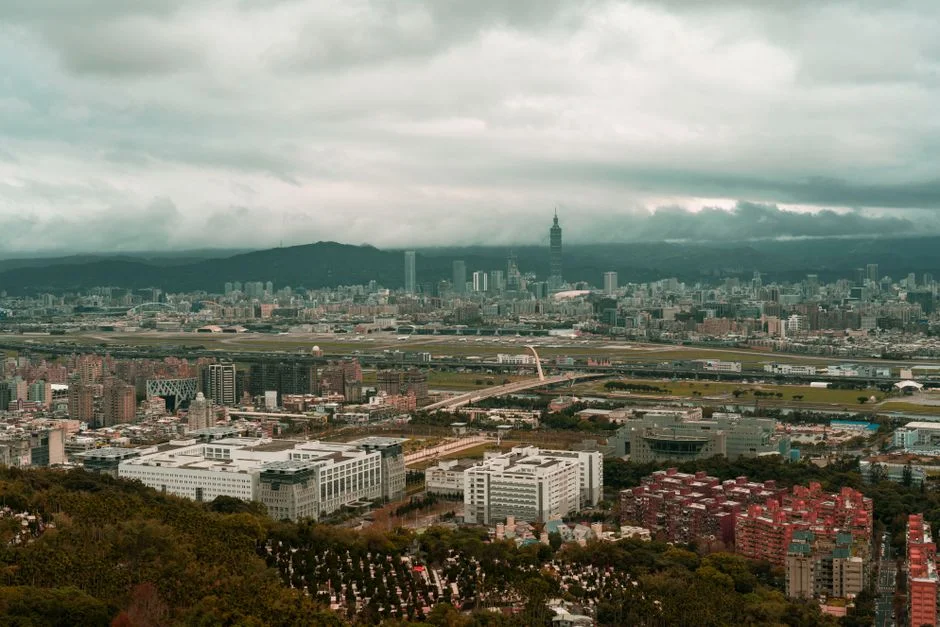
Computex has long served as a barometer for the global technology industry. Major announcements from companies like Nvidia, AMD, and Qualcomm are expected throughout the week. For investors in Singapore watching semiconductor stocks, the show offers an early read on product cycles that could move markets.
Singapore's Stake in Taiwan's Tech Stage

Singapore maintains significant trade exposure to Taiwan's technology sector. The city-state imported approximately $28 billion in electronic components and semiconductors from Taiwan last year, according to data from Enterprise Singapore. Much of that flows through Singapore's port and serves as inputs for re-exports throughout Southeast Asia. When Taiwanese factories slow down or speed up, Singapore's logistics and trading houses feel it within weeks.
Local tech investors should pay attention to announcements this week because they directly affect Singapore-listed companies. Firms like Venture Corporation and Frenck-Allen Group source components from Taiwanese suppliers for electronics assembly operations. Any shift in Taiwanese production timelines ripples through their order books.
Semiconductor Outlook Shapes Regional Sentiment
Taiwan Semiconductor Manufacturing Company, the contract chipmaker that produces chips for Apple, Nvidia, and dozens of other brands, does not exhibit at Computex but casts a long shadow over the event. The company's latest quarterly earnings beat forecasts by 8 percent, and executives are scheduled to speak at a separate forum during the show. Their comments on advanced packaging capacity and AI chip demand will land with weight in Singapore's financial district.
Trade analysts in Singapore are watching how American export restrictions on advanced chips to China affect demand patterns at Computex. Several Taiwanese ODMs have shifted production lines away from mainland China to facilities in Taiwan and Southeast Asia, including Vietnam and Malaysia. That migration creates both opportunities and competitive pressure for Singapore's own manufacturing sector.
What Companies Are Showing
Attendees at the Nangang venue will find expanded AI-focused pavilions this year. Server manufacturers including Quanta Computer and Inventec are displaying next-generation rack systems designed for large language model training. Taiwanese motherboards and graphics card makers are launching products built around Nvidia's latest architecture, which the American firm unveiled last month to strong investor reaction on the Nasdaq.
Beyond hardware, cybersecurity firms and cloud service providers from Taiwan are using Computex to court regional distributors. Singapore-based system integrators often serve as bridges between Taiwanese vendors and enterprise clients across ASEAN. A senior executive from Singapore Telecommunications attended the opening ceremony, according to a spokesperson for the telco, though details of any discussions remained private.
Market Reaction and Investor Watchpoints
Taiwan's stock exchange opened Monday morning following the weekend's drone display, with the Taiex index climbing 1.3 percent in early trading. Chip stocks led gains after positive signals from the show floor. In Singapore, the STI followed suit, rising 0.6 percent by mid-morning as technology-linked shares ticked higher. The correlation reflects how closely Singapore investors track Taiwanese tech sentiment as a leading indicator.
Currency markets showed modest movement. The Taiwan dollar strengthened slightly against the US dollar, while the Singapore dollar held steady. Fixed income markets remained calm, suggesting investors are treating Computex announcements as incremental rather than market-altering events so far. The real test comes later in the week when major product roadmaps are revealed.
Supply Chain Resilience on Display
Beyond the glitzy drones, Computex carries a serious subtext about supply chain geography. The pandemic exposed how concentrated chip production had become in Taiwan and South Korea. Since then, governments in the United States, Japan, and the European Union have poured subsidies into building domestic semiconductor capacity. Taiwan's response has been to move up the value chain, producing increasingly advanced chips while letting older technology flow to overseas fabs.
For Singapore, this restructuring matters. The city-state has attracted investments from GlobalFoundries and Micron for assembly and testing operations, positioning itself as a neutral hub in a geopolitically charged landscape. Computex discussions about where next-generation packaging will occur could influence Singapore's next wave of industrial policy decisions.
Geopolitical Currents Beneath the Surface
No Computex discussion ignores the Taiwan Strait entirely. Military exercises by China around Taiwan in recent years add an undercurrent of risk to supply chain planning. Large tech buyers from North America and Europe increasingly ask Taiwanese suppliers about business continuity arrangements. Several companies at this year's show have quietly relocated critical engineering talent to facilities outside Taiwan as a precaution.
That said, the commercial momentum at Computex remains formidable. Taiwanese tech executives privately express confidence that their island's technical expertise gives them leverage no competitor can easily replicate. The drone display symbolically reinforced that message — hundreds of machines performing in perfect sync, a metaphor for an industry that runs on precision and scale.
Looking Ahead
The most consequential announcements land midweek. Nvidia's chief executive Jensen Huang is expected to detail the company's AI roadmap during a Wednesday keynote that investors in Singapore have circled on calendars. TSMC executives hold their quarterly earnings call Thursday, and any revision to full-year guidance will move semiconductor stocks across Asian markets. Singapore traders should brace for volatility around those two events.
The drone display may have captured headlines, but Computex 2024 is fundamentally about invisible negotiations happening in hotel lobbies and meeting rooms across Taipei. Follow-on deals announced through Friday will determine whether this edition of the show lives up to its $50 billion billing. Markets will respond accordingly.
See Also
- England Cricket Star Nat Sciver-Brunt Exits NZ ODI Series
- Telangana Declares Inter Results as Pass Rates Surge
The correlation reflects how closely Singapore investors track Taiwanese tech sentiment as a leading indicator.Currency markets showed modest movement. The real test comes later in the week when major product roadmaps are revealed.Supply Chain Resilience on DisplayBeyond the glitzy drones, Computex carries a serious subtext about supply chain geography.
What is the latest news about computex opens with taipei drone spectacle and 50 billion in tech deals hang in the balance?
Why does this matter for economy-business?
What are the key facts about computex opens with taipei drone spectacle and 50 billion in tech deals hang in the balance?