Israeli authorities have detained three Portuguese nationals in a move that is sending ripples through European diplomatic channels and regional markets. The detainees, who were captured in the West Bank, are reported to be in good physical health but show signs of psychological distress. This development adds a new layer of complexity to the already volatile geopolitical landscape in the Middle East, prompting investors to reassess risk exposures in the region.
Immediate Diplomatic and Economic Repercussions
The detention has triggered an immediate response from Lisbon, with the Portuguese Foreign Ministry calling for urgent consular access. This diplomatic friction is not merely a political inconvenience; it represents a tangible risk factor for European businesses operating in or near Israel. Markets in Frankfurt and London reacted swiftly, with the Eurozone’s peripheral bonds seeing a slight uptick in yield as investors priced in potential escalation.
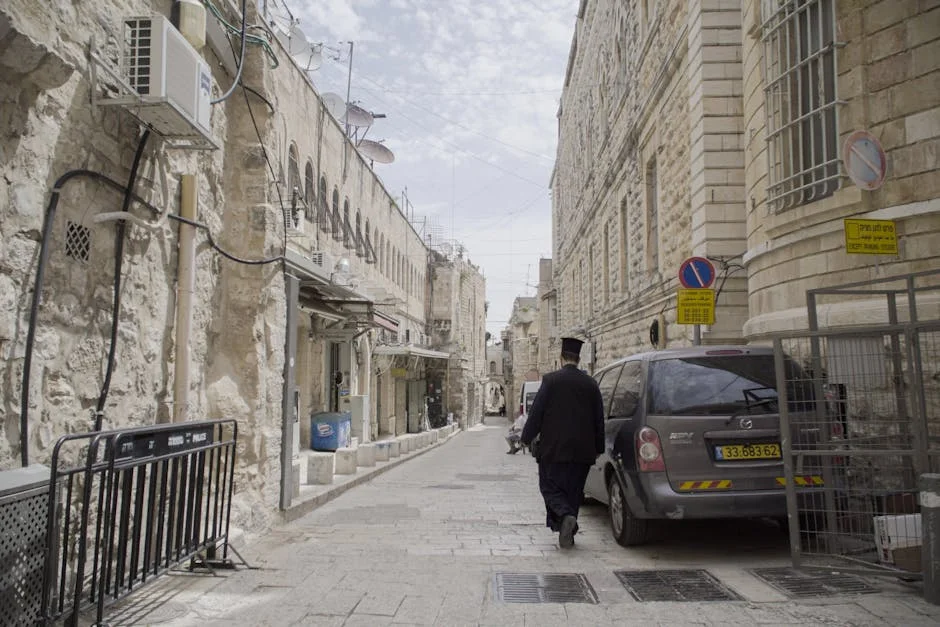
For the broader European economy, the situation underscores the fragility of supply chains that rely on stability in the Eastern Mediterranean. Shipping routes through the Red Sea, already strained by Houthi attacks, now face the additional uncertainty of potential diplomatic spats between key European partners and Israel. Logistics companies are closely monitoring the situation, as any further escalation could lead to higher insurance premiums and slower transit times.
The economic implications extend beyond logistics. Foreign direct investment (FDI) flows into the region are sensitive to political stability. A sudden increase in diplomatic tensions can cause foreign investors to pause new capital injections, preferring to wait for clarity. This hesitation can have a compounding effect on local economies that rely on steady inflows of foreign capital to fund infrastructure and technology sectors.
Market Volatility and Investor Sentiment
Financial markets are notoriously sensitive to geopolitical shocks, and this latest development is no exception. The Tel Aviv Stock Exchange (TASE) experienced increased volatility, with the technology sector—Israel’s economic engine—seeing mixed reactions. Investors are weighing the immediate shock of the detentions against the longer-term fundamentals of the Israeli economy, which remains robust despite the ongoing conflict.
In Singapore, which serves as a key financial hub for Asia-Pacific investments, analysts are closely watching how this event influences capital flows. The Singapore Exchange (SGX) listed companies with significant exposure to the Middle East are under scrutiny. Investors in the region are using this event as a case study in how quickly political events can translate into economic consequences, reinforcing the need for diversified portfolios.
The concept of "risk premium" is central to understanding the market reaction. When uncertainty rises, investors demand a higher return for holding assets in the affected region. This leads to a rise in bond yields and a potential decline in equity prices. For the Portuguese detainees, the human cost is immediate, but for the global economy, the cost is measured in basis points and percentage changes in key indices.
Impact on Regional Business Operations
Businesses operating in the Middle East are facing a dual challenge: maintaining operational continuity while managing stakeholder expectations. Companies with significant workforces in the West Bank or Gaza are reviewing their security protocols and contingency plans. This administrative burden translates into higher operational costs, which can eventually be passed on to consumers in the form of higher prices.
The tourism sector, a major contributor to Israel’s GDP, is also feeling the heat. Potential visitors from Europe, including Portugal, may reconsider their travel plans due to the perceived increase in risk. This decline in tourist arrivals has a direct impact on hotel occupancy rates, restaurant revenues, and retail sales. The ripple effect is felt across multiple sectors, from transportation to entertainment.
Furthermore, the diplomatic tension may lead to targeted economic measures, such as temporary tariffs or import restrictions. While these measures might be symbolic, they can disrupt established trade patterns. Businesses that rely on just-in-time inventory systems are particularly vulnerable to such disruptions, as even a short delay in customs clearance can halt production lines.
Supply Chain Disruptions
The detention of the Portuguese nationals highlights the vulnerability of supply chains in conflict zones. Key supply chain disruptions include:
- Increased insurance costs for maritime transport through the Red Sea.
- Delays in customs clearance due to heightened security checks.
- Potential strikes or labor disputes in key industrial hubs.
These disruptions force companies to reconsider their sourcing strategies. Some may look to diversify their supplier base, moving production to less volatile regions. This shift can take time and capital, but it is a necessary step for long-term resilience. The economic lesson here is clear: geopolitical stability is a key component of economic efficiency.
The Role of International Organizations
International organizations such as the European Union and the United Nations are likely to play a mediating role. The EU, in particular, has a strong interest in maintaining stable relations with Israel, given the size of its trade agreement. Any diplomatic fallout could impact the implementation of the EU-Israel Association Agreement, which covers a wide range of economic sectors.
The International Monetary Fund (IMF) and the World Bank are also watching the situation, as geopolitical instability can affect economic growth projections. These institutions provide crucial funding and policy advice to countries in the region. A worsening situation could lead to a reassessment of loan terms and investment priorities, potentially affecting infrastructure projects and social programs.
Diplomatic efforts to secure the release of the detainees will likely involve high-level negotiations. These negotiations can be time-consuming and may involve trade-offs that have broader economic implications. For example, Israel might seek concessions on trade or investment in exchange for a smoother diplomatic resolution. Understanding these dynamics is essential for investors who want to anticipate market movements.
Long-term Economic Outlook
While the immediate reaction to the detention is one of uncertainty, the long-term economic outlook depends on how the situation evolves. If the detentions lead to a broader diplomatic crisis, the economic impact could be more profound. However, if the issue is resolved through back-channel negotiations, the market impact may be short-lived.
Investors are advised to monitor key indicators such as bond yields, currency exchange rates, and commodity prices. These indicators provide real-time insights into market sentiment and can help investors make informed decisions. For example, a rise in the price of oil could signal increased tension in the region, while a stabilization in currency markets might suggest that the worst is over.
The resilience of the Israeli economy is a key factor to consider. Despite the ongoing conflict, Israel has demonstrated a remarkable ability to adapt and innovate. The technology sector, in particular, has shown strong growth, driven by a robust startup ecosystem and significant foreign investment. This resilience provides a buffer against short-term shocks, but it does not eliminate the risks.
Investment Strategies in Uncertain Times
In times of geopolitical uncertainty, a defensive investment strategy often outperforms. This involves increasing exposure to defensive sectors such as healthcare, utilities, and consumer staples. These sectors tend to be less sensitive to economic cycles and geopolitical shocks, providing a stable return on investment.
Diversification is another key strategy. By spreading investments across different regions and asset classes, investors can reduce the impact of a single event on their overall portfolio. For example, an investor with heavy exposure to the Middle East might consider increasing their holdings in Asia or Europe to balance their risk profile.
Active management is also crucial. Passive investment strategies, such as index funds, may not be sufficient in times of high volatility. Active managers can adjust their portfolios in response to changing market conditions, potentially capturing gains and minimizing losses. This requires a deep understanding of the geopolitical and economic landscape, as well as a keen eye for emerging trends.
What to Watch Next
The coming weeks will be critical in determining the long-term impact of the detention of the three Portuguese nationals. Investors and businesses should monitor several key developments. First, watch for official statements from the Portuguese Foreign Ministry and the Israeli government, as these will provide clues about the diplomatic trajectory. Second, keep an eye on the Tel Aviv Stock Exchange and key European markets for signs of sustained volatility. Finally, monitor shipping insurance rates and Red Sea transit times, as these will indicate the extent of supply chain disruptions. The resolution of this crisis will likely set the tone for regional economic stability in the near term.
See Also
- Timor-Leste Slashes 2026 Growth Forecast — Markets React
- Rubio Pushes India Energy Deal Amid Iran Oil Shock