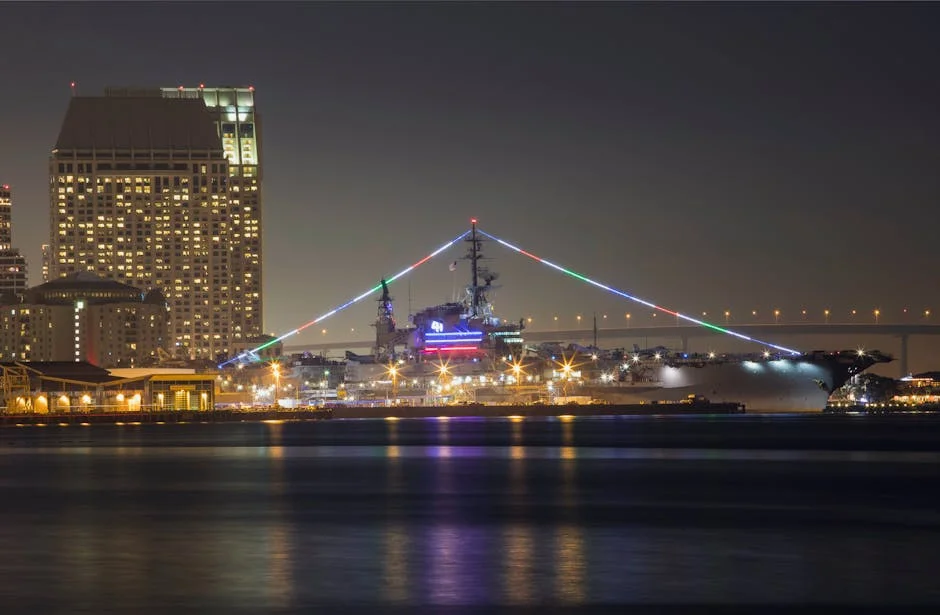
The USS Abraham Lincoln (CVN-72) has received emergency supplies following reports of food shortages on the ship, highlighting logistical challenges in the region. The U.S. Navy confirmed the resupply operation took place in the Arabian Sea, a critical area for global trade and military operations. The incident has drawn attention to the broader economic and strategic implications for Southeast Asian markets, particularly Singapore, which relies on stable supply chains through the region.
Logistical Challenges and Regional Impact
The USS Abraham Lincoln, a Nimitz-class aircraft carrier, is a key asset in U.S. naval operations in the Indo-Pacific. The recent supply mission underscores the fragility of maritime logistics, especially in times of geopolitical tension. According to the U.S. Department of Defense, the ship’s crew was provided with 100 tons of food and medical supplies during the resupply, which took place near the port of Dubai, UAE. This operation highlights the interconnectedness of global supply chains, with Singaporean companies and investors closely monitoring the situation.
The food shortage on the USS Abraham Lincoln was attributed to delays in the delivery of cargo ships due to increased security measures in the region. The U.S. Navy has not disclosed the exact cause of the delay, but officials have confirmed that it is unrelated to the ongoing conflict in the Middle East. The incident has raised concerns among defense analysts about the resilience of military logistics in an increasingly volatile global environment.
Market Reactions and Investor Sentiment


Investors in Singapore have taken note of the developments, with some analysts warning that disruptions in maritime supply chains could have ripple effects on regional trade. The Singapore Exchange (SGX) saw a slight dip in defense and logistics stocks following the announcement, as investors recalibrated their risk assessments. “The USS Abraham Lincoln’s situation is a reminder of how interconnected the global economy is,” said Dr. Lim Wee Kiat, an economist at the National University of Singapore.
Market watchers are also paying close attention to the broader implications for global trade routes. The Strait of Hormuz, a critical chokepoint for oil and goods, has seen increased military activity, raising concerns about potential disruptions. Singapore, a major shipping hub, is particularly vulnerable to any escalation in the region. The Maritime and Port Authority of Singapore (MPA) has issued a statement assuring stakeholders that it is monitoring the situation closely and is prepared to manage any disruptions.
Strategic Implications for Southeast Asia
The presence of the USS Abraham Lincoln in the region is part of a broader U.S. strategy to maintain a stable security environment in the Indo-Pacific. The ship’s recent resupply operation has been interpreted by some analysts as a sign of the U.S. military’s continued commitment to the region. However, others argue that the incident highlights the growing complexity of operating in an area where geopolitical tensions are on the rise.
The situation has also sparked renewed interest in the role of regional alliances. The Association of Southeast Asian Nations (ASEAN) has called for greater cooperation among member states to ensure the stability of maritime routes. “ASEAN must play a more active role in safeguarding regional security,” said Dr. Nguyen Van Thanh, a security expert at the University of Malaya. “The incident involving the USS Abraham Lincoln is a wake-up call for all countries in the region.”
What to Watch Next
Investors and businesses in Singapore should closely monitor the next few weeks for any further developments in the region. The U.S. Navy has scheduled a series of exercises in the South China Sea, which could have implications for regional stability. Additionally, the Singapore government is expected to release an updated trade and security report in the coming months, which will provide further insights into how the situation is being managed.
The incident involving the USS Abraham Lincoln serves as a reminder of the delicate balance between military operations, global trade, and economic stability. As the situation unfolds, Singapore’s businesses and investors will be watching closely for any signs of disruption or opportunity in the region.
See Also
- RBI Holds Rates — Rupee Volatility Triggers Market Jitters
- Bakery Manager Fired for Bible Verse Post During Xenophobic Tensions
Singapore, a major shipping hub, is particularly vulnerable to any escalation in the region. The ship’s recent resupply operation has been interpreted by some analysts as a sign of the U.S.
What is the latest news about uss abraham lincoln receives supplies amid food shortages in za?
Why does this matter for economy-business?
What are the key facts about uss abraham lincoln receives supplies amid food shortages in za?