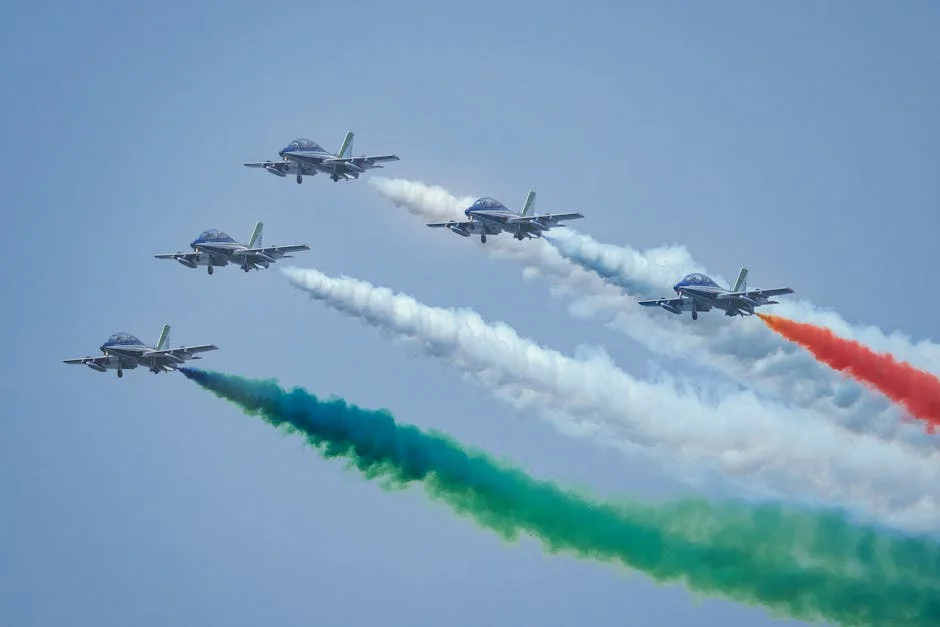
The Indian Air Force (IAF) has unveiled the Tejas Mk2, a next-generation fighter jet developed by the Defence Research and Development Organisation (DRDO), in a bid to challenge the dominance of US, Russian, and Chinese fighter jets. The aircraft, which made its debut in Bengaluru, is part of a broader effort to modernise India’s air force and reduce reliance on foreign suppliers. The move comes amid growing strategic competition in South Asia and global aerospace markets.
Tejas Mk2: A New Era for Indian Aerospace
The Tejas Mk2, an upgraded version of the original Tejas light combat aircraft, features advanced avionics, improved radar systems, and enhanced manoeuvrability. The aircraft is designed to carry a range of air-to-air and air-to-ground weapons, including the Astra missile and the BrahMos cruise missile. With a maximum speed of 1,800 km/h and a combat range of 1,200 km, the Tejas Mk2 is expected to play a critical role in India’s air defence strategy.

Dr. S. Christopher, Director of the Aeronautical Development Agency (ADA), highlighted that the Tejas Mk2 represents a significant leap in indigenous aerospace capabilities. “The aircraft is a testament to India’s growing technological prowess and strategic autonomy in defence manufacturing,” he said. The project, which has faced delays and cost overruns, is now on track for initial operational clearance by 2025.
Global Competition: Tejas vs F-35, Su-57, and J-20


The Tejas Mk2 faces stiff competition from the US-made F-35 Lightning II, Russia’s Su-57, and China’s J-20. The F-35, a fifth-generation stealth fighter, is already in service with the US and several allied nations. Russia’s Su-57, while not yet in mass production, has been showcased in air shows and is being marketed to countries in the Global South. China’s J-20, a stealth bomber, is part of a broader effort to project power across the Indo-Pacific region.
Analysts suggest that the Tejas Mk2’s success will depend on its performance in real-world conditions and its ability to integrate with India’s broader military infrastructure. “The Tejas is not a direct match for the F-35 in terms of stealth or sensor fusion, but it offers a cost-effective alternative for regional air superiority,” said Rajiv Nayan, a defence analyst at the Institute for Defence Studies and Analyses (IDSA).
Economic and Market Implications
The Tejas Mk2 programme has significant economic implications for India’s aerospace and defence sector. The DRDO and private firms such as Hindustan Aeronautics Limited (HAL) are involved in the project, which is expected to generate thousands of jobs and boost local manufacturing. The government has also announced plans to export the Tejas to friendly nations, which could open new markets and increase revenue.
Investors are closely watching the development of the Tejas Mk2, as it could signal a shift in India’s defence procurement strategy. “A successful Tejas programme could reduce India’s dependence on foreign suppliers and create a more self-reliant defence industry,” said Priya Kapoor, a defence sector analyst at Axis Capital. “This could have long-term benefits for the Indian economy and stock market.”
Market Reactions and Investor Sentiment
The announcement of the Tejas Mk2 has led to a mixed reaction in the Indian stock market. Shares of HAL and other aerospace firms saw a modest rise, reflecting investor optimism. However, concerns remain about the project’s timeline and budget. The initial contract for 83 Tejas Mk2 jets, valued at ₹45,000 crore, is expected to be signed by 2025, according to government sources.
- Tejas Mk2 is set to be deployed in the western and northern sectors of India.
- India plans to procure 200 Tejas Mk2 jets over the next decade.
- The project is expected to boost India’s aerospace exports by 20% by 2030.
What’s Next for India’s Aerospace Industry?
India’s push to develop the Tejas Mk2 is part of a broader strategy to build a self-reliant defence industry. The government’s “Make in India” initiative has prioritised domestic manufacturing, and the Tejas programme is a key component of this effort. However, challenges remain, including technology transfer issues, maintenance costs, and the need for continuous upgrades.
Analysts warn that India must invest more in research and development to keep pace with global competitors. “The Tejas Mk2 is a step in the right direction, but India needs to invest in next-generation technologies such as artificial intelligence, stealth, and advanced materials,” said Dr. N. K. Singh, a defence policy expert at the Indian Institute of Management, Ahmedabad.
The Tejas Mk2 programme is a test of India’s ability to balance ambition with execution. As the aircraft moves closer to operational status, investors, businesses, and policymakers will be watching closely to see if it can deliver on its promise of technological and economic transformation.
See Also
- NY Times Claims to Identify Satoshi in Major Crypto Breakthrough
- Karnataka Bans 100+ Chemicals — and Industries Are Panicking
“A successful Tejas programme could reduce India’s dependence on foreign suppliers and create a more self-reliant defence industry,” said Priya Kapoor, a defence sector analyst at Axis Capital. Shares of HAL and other aerospace firms saw a modest rise, reflecting investor optimism.