The Aukus security partnership unveiled new autonomous drone technology on Tuesday designed to monitor and protect critical undersea communications cables, with Australia's Defence Minister Richard Marles issuing a stark warning that "the seabed is a battlefield." The announcement marks a significant escalation in how Western allies are hardening their communications infrastructure against potential disruption. The technology, developed under the three-nation framework linking Australia, the United Kingdom, and the United States, represents the most concrete step yet in operationalising undersea warfare capabilities within Aukus.
Why Undersea Cables Matter to the Global Economy
More than 95 percent of global internet traffic traverses approximately 400 active submarine cables stretching across ocean floors worldwide. These fibre-optic arteries carry an estimated $10 trillion in daily financial transactions, making them among the most economically sensitive pieces of infrastructure on the planet. A single cable cut can disrupt banking networks, supply chains, and commerce across entire continents within hours. Singapore, as one of Asia's busiest financial hubs, sits at the intersection of several major cable routes connecting Southeast Asia to Europe, the Middle East, and the Americas. Disruptions here carry outsized consequences for regional trade and investment flows.
The Drone Technology: What Aukus Announced

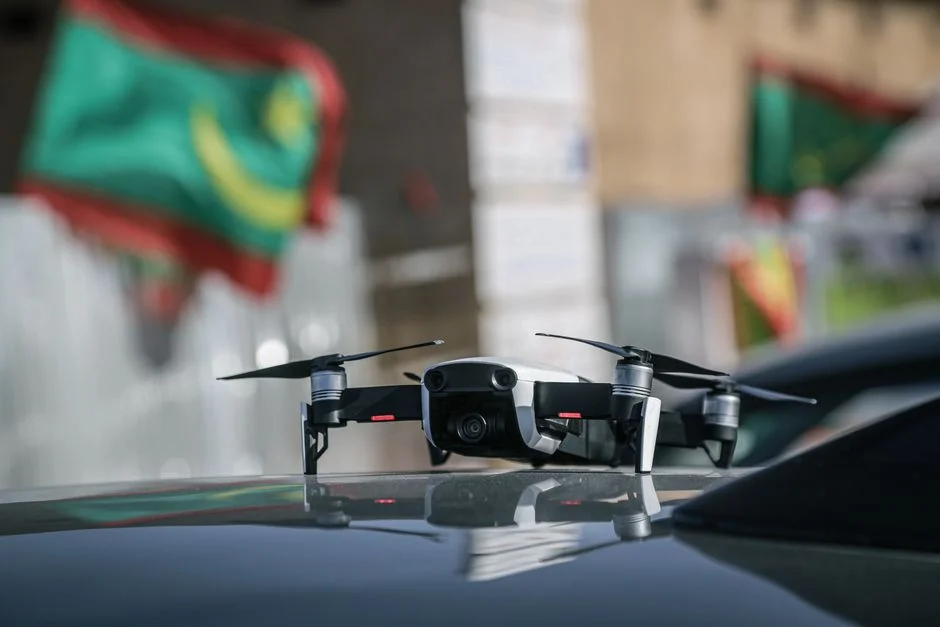
The new system involves autonomous underwater vehicles capable of conducting persistent surveillance along cable corridors. Defence officials in Canberra confirmed the drones can operate in deep water environments where traditional patrol methods prove costly and logistically challenging. The technology draws on advances in artificial intelligence and machine learning to detect anomalous vessel activity near cable landing stations and along vulnerable shallow-water sections. Australia committed to integrating these capabilities into its existing maritime domain awareness architecture over the next 18 months.
Operational Capabilities and Limitations
The drones are designed primarily for surveillance rather than active deterrence. They cannot physically prevent a vessel from dropping anchor in a cable zone, but they provide early warning that enables rapid response by naval assets. Defence analysts note that attribution remains the central challenge—identifying whether damage was accidental or deliberate, and by whom. The new Aukus technology addresses this by providing continuous monitoring data that can support forensic investigation after any incident.
Beijing's Shadow Over Cable Security
While Marles did not name Beijing directly in his public remarks, the strategic calculus behind the announcement was clear to observers in the region. Chinese research vessels have been spotted near cable routes in the South China Sea and Indian Ocean in recent years, prompting concern among Western intelligence agencies. Taiwan, which processes enormous volumes of global tech traffic through its cable connections, has become a particular focal point for contingency planning. Any disruption affecting Taiwanese cable infrastructure would send shockwaves through semiconductor supply chains and Asian technology markets.
Market and Business Implications
The economic stakes of undersea cable vulnerability extend far beyond military planning rooms. Insurance firms offering marine and trade interruption coverage are already reassessing risk models that previously treated cable damage as a remote possibility. Telecommunication companies routing traffic through contested zones face higher compliance costs as governments mandate redundant routing and enhanced monitoring. Data centre operators in Singapore and Hong Kong are scrutinising their cable interconnection strategies, with some accelerating plans to diversify landing points away from historically concentrated hubs. For investors in undersea cable infrastructure, the Aukus announcement signals that security costs will rise, potentially compressing margins for operators who previously faced minimal regulatory burden in this domain.
Regional Reactions and Diplomatic Fallout
Southeast Asian governments have watched the Aukus development with a mixture of interest and caution. Several nations maintain economic relationships with both Western partners and Beijing, leaving them reluctant to align too visibly with any single security framework. The Philippines, which recently granted US forces expanded access to bases in its territory, represents an exception—but even Manila has stopped short of endorsing Aukus directly. Japan, though not a formal Aukus member, has deepened its cooperation with the grouping on undersea domain awareness, reflecting Tokyo's own anxieties about its cable exposure in the East China Sea.
What Happens Next
The Aukus partners plan to conduct their first joint exercise incorporating the new drone technology in the Coral Sea region before the end of the year. Industry officials will be watching closely for details on interoperability standards—whether the autonomous systems can integrate with existing naval command structures across all three nations. Separately, the International Cable Protection Committee, an industry body representing cable operators, has scheduled its annual forum in Singapore for October, where executives are expected to press governments for clarity on liability frameworks should commercial vessels inadvertently damage militarily sensitive routes. For now, the markets most exposed to cable disruption—finance, technology, logistics—have little option but to monitor developments and hedge against an infrastructure threat that has moved decisively from theoretical to operational.
See Also
- Reliant Warns of Fuel Crisis as Oil Prices Surge in Pacific Islands
- Government Reverses Course, Names Donna Ockenden as Maternity Inquiry Chair - What It Means for Markets
Chinese research vessels have been spotted near cable routes in the South China Sea and Indian Ocean in recent years, prompting concern among Western intelligence agencies. Japan, though not a formal Aukus member, has deepened its cooperation with the grouping on undersea domain awareness, reflecting Tokyo's own anxieties about its cable exposure in the East China Sea.
What is the latest news about aukus drone tech targets undersea cable protection as marles declares seabed is a battlefield?
Why does this matter for politics-governance?
What are the key facts about aukus drone tech targets undersea cable protection as marles declares seabed is a battlefield?