Reverend Peter Koon Ho, a prominent Hong Kong legislator, has demanded clarity from authorities after officials took custody of an undocumented baby following the arrest of its parents in one of the city's most densely populated districts. The Social Welfare Department confirmed it assumed temporary guardianship of the infant, whose parents were detained by immigration officers at a residential address in Sham Shui Po on Tuesday. The case has reignited debate over Hong Kong's enforcement posture and its implications for businesses already struggling with labor shortages.
Parents Detained, Child Taken Into Care
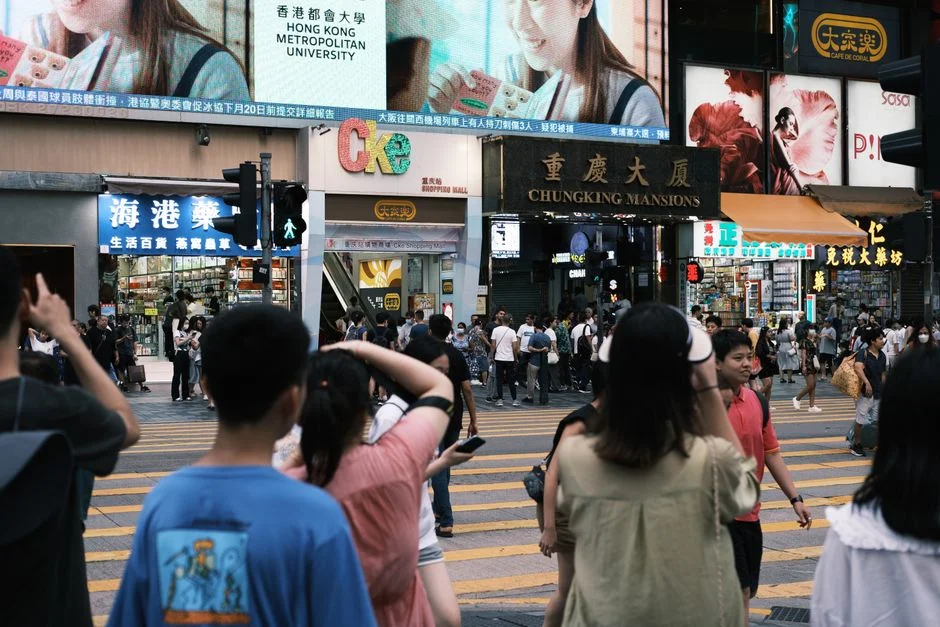
Immigration officers arrested the couple during a routine operation in Sham Shui Po, a working-class neighbourhood in the Kowloon district known for its high population density and aging tenement buildings. The parents, whose identities have not been released, were held on suspicion of breaching conditions of stay. Their infant, later identified in local media reports as Baby Danny, was handed to Social Welfare Department officers at the scene.

The department issued a brief statement confirming temporary custody but declined to provide further details, citing privacy obligations. No timeline has been given for reunification or alternative care arrangements. Reverend Peter Koon Ho, who previously chaired the Legislative Council's welfare panel, expressed sharp criticism. "Removing a child from parental care is an extreme measure," he told reporters outside the LegCo complex. "Authorities must demonstrate that every viable alternative was exhausted before this step was taken."
A Portrait of Hong Kong's Immigration Crackdown


The incident fits a broader pattern. Hong Kong's Immigration Department conducted more than 2,300 arrests in enforcement operations during the first quarter of this year, according to official figures, up from fewer than 800 during the same period in 2022. The acceleration reflects a government campaign to address public concerns about strains on housing, healthcare, and social services.
Yet the intensification of enforcement carries economic reverberations that extend well beyond the immigration debate. Sectors ranging from construction to domestic services have long depended on undocumented workers to fill roles that local residents frequently decline. Tighter controls threaten to constrict an already tight labor market at a time when businesses across Hong Kong are contending with recruitment difficulties.
Business Community Sounds the Alarm
The Hong Kong General Chamber of Commerce acknowledged unease among its membership following recent enforcement surges. A senior official at the business group, speaking without authorization to discuss internal deliberations, said member companies have flagged concerns about operational disruptions if immigration operations continue at current levels. "Construction firms, restaurant operators, and households relying on domestic helpers all face similar pressures," the official said. "The pipeline of available workers is already thin."
Those concerns align with broader economic data. Hong Kong's labor force contracted by 1.2 percent year-on-year in the most recent quarterly report, with the unemployment rate holding at 2.9 percent—a figure that masks acute shortages in specific sectors. Economists at several banks operating in the city have warned that continued emigration and restrictive immigration policies risk compounding structural workforce challenges.
Workforce Pressures and Demographic Constraints
Hong Kong's population fell for the third consecutive year in 2023, declining by 0.9 percent to approximately 7.5 million residents. The trend has alarmed policymakers, who face the dual challenge of supporting an aging demographic while sustaining economic growth in traditional pillars such as finance, trade, and logistics. A shrinking labor pool makes it harder for companies to expand operations and places upward pressure on wages across lower-wage industries.
For investors with exposure to Hong Kong-listed companies, the implications are material. Firms in labour-intensive sectors have reported higher operating costs, with some citing difficulties meeting demand during peak periods. Analysts covering the retail and hospitality sectors have flagged staff retention as a persistent earnings risk.
Children Caught in the Middle
The infant's situation has also drawn attention to legal ambiguities affecting children born to undocumented parents in Hong Kong. Under current rules, such children do not automatically qualify for publicly funded schooling, hospital care, or social services, even if they remain in the territory for years. Advocacy groups say this creates a class of residents in perpetual limbo, with no path to regularization regardless of how long they remain.
The Women's Coalition for Refugee Communities, a local advocacy organization, said it has assisted 47 families in comparable circumstances over the past 18 months. "These are not statistics," the coalition's director said. "They are children growing up without documentation, without access to basic services, without any certainty about their future." The group plans to submit a formal petition to the Social Welfare Department requesting policy guidance on how officials should handle minors affected by parental detention.
Legislator Vows to Push for Reform
Reverend Peter Koon Ho said he would raise the case during the next Legislative Council session on November 12, when lawmakers are scheduled to debate the Social Welfare Department's annual estimates. He has previously advocated for greater flexibility in cases involving minor immigration violations, arguing that enforcement should not fall hardest on those with no independent agency—their children.
Koon stopped short of calling for a blanket amnesty but said the government should establish clearer guidelines to prevent similar situations. "There is a difference between pursuing serious immigration offences and separating a baby from its parents over a paperwork issue," he said. "That line needs to be drawn explicitly, in writing, before more families are caught in the grey zone."
What Happens Next
The Social Welfare Department has not indicated when a decision regarding Baby Danny's long-term care arrangements will be made. If the parents face deportation, officials will need to determine whether the child accompanies them or remains in Hong Kong under alternative guardianship. Rights groups say either outcome carries significant implications for the minor's welfare and legal status.
A demonstration is planned outside the Central Government Offices in Admiralty on Sunday, organized by a coalition of advocacy organizations calling for reforms to immigration procedures affecting children. Organizers expect several hundred participants. The outcome of Sunday's protest and the November legislative session will test whether the government's enforcement posture is open to recalibration—or whether the current trajectory will hold.
See Also
- US Woman Defrauds Family of $40,000 to Fund Trips to Australia — Shocking Betrayal
- UK Launches Covid Inquiry — Businesses Brace for New Rules
The trend has alarmed policymakers, who face the dual challenge of supporting an aging demographic while sustaining economic growth in traditional pillars such as finance, trade, and logistics. Analysts covering the retail and hospitality sectors have flagged staff retention as a persistent earnings risk.Children Caught in the MiddleThe infant's situation has also drawn attention to legal ambiguities affecting children born to undocumented parents in Hong Kong.
What is the latest news about reverend peter koon ho demands answers after hong kong seizes undocumented baby?
Why does this matter for health-medicine?
What are the key facts about reverend peter koon ho demands answers after hong kong seizes undocumented baby?