A coalition of Muslim clerics in India has formally petitioned the Centre to designate the cow as the country's national animal, igniting a heated debate that extends far beyond religious circles into boardrooms and trading floors across Asia.
The Petition and Its Immediate Impact
The All India Muslim Personal Law Board submitted its formal request to the Ministry of Environment, Forest and Climate Change last Thursday, arguing that constitutional recognition would protect the animal from slaughter bans that have fragmented India's federal system. The board's president, Maulana Khalid Rashid, told reporters in Lucknow that the designation would create uniform protections across all 28 states. His statement drew immediate applause from Hindu nationalist groups while sending ripples through commodities markets already navigating supply chain disruptions.
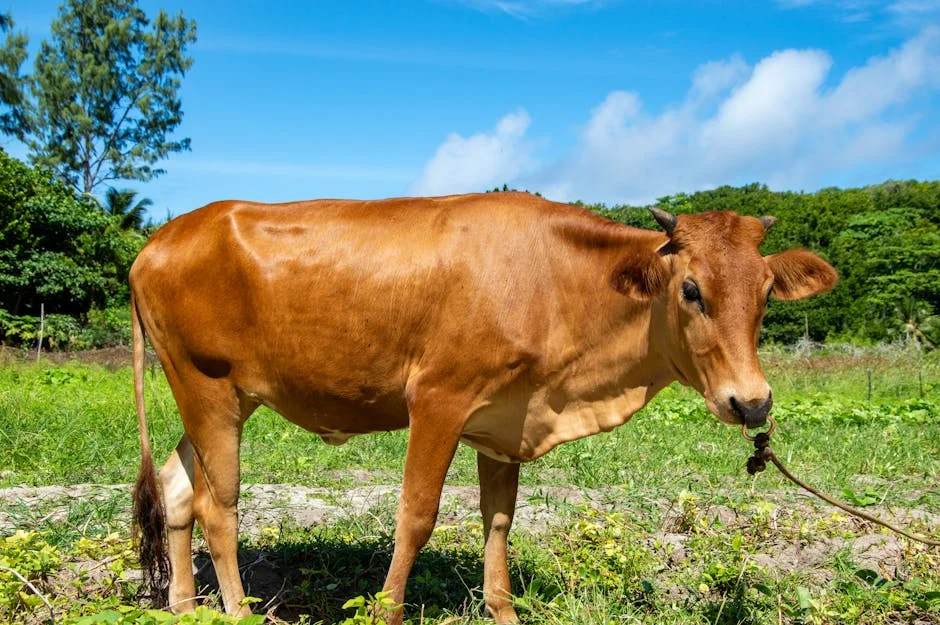
India's livestock sector contributes approximately 4.1 percent to the nation's gross domestic product, with cattle valued at an estimated ₹8.8 trillion across the country. Any policy shift affecting these animals carries weighty implications for dairy cooperatives, leather manufacturers, and export partners across Southeast Asia, including Singapore, which imports significant quantities of Indian finished leather products.
Why the BJP Government Is Hesitating


Prime Minister Narendra Modi's administration finds itself squeezed between competing pressures. The Bharatiya Janata Party's core voter base has demanded stronger cow protection for years, yet senior ministers have quietly acknowledged the economic consequences of blanket bans. Three state governments controlled by the BJP—Rajasthan, Gujarat, and Uttar Pradesh—have each introduced slaughter restrictions since 2017, but enforcement has varied dramatically, creating black markets that now supply neighbouring states with unrestricted cattle movement.
Finance ministry officials speaking on background confirmed that leather exports totalled $6.9 billion in the last fiscal year, with the industry employing over four million workers, many of them from marginalised communities including Muslims. Any move that disrupts this supply chain would reverberate through industrial zones in Kanpur, Agra, and Jalandhar, where tanneries depend on regular livestock throughput.
The Singapore Connection
Singapore's position as a regional financial hub makes it sensitive to policy shifts in India's major trading partners. The Monetary Authority of Singapore tracks agricultural commodity flows as part of its broader economic monitoring. Trade data from Enterprise Singapore shows that Indian leather goods imports reached S$340 million last year, with additional demand for pharmaceutical gelatin derived from bovine sources. Singapore-based investors holding positions in Indian manufacturing firms have begun requesting clarification from company secretaries about potential disruptions.
Economic Fault Lines Beneath the Religious Debate
The proposed national animal designation exposes a fundamental tension within India's agrarian economy. Dairy farmers argue that unproductive animals consume resources without generating income, forcing many to abandon cattle husbandry altogether. The National Dairy Development Board reported that rural households maintaining unproductive cattle face average annual losses of ₹23,000—money that could fund children's education or medical emergencies.
Simultaneously, the leather industry has modernised rapidly over the past decade, with major manufacturers investing in traceability systems to satisfy European buyers increasingly concerned about animal welfare standards. Council for Leather Exports director president R. K. Harrington stated last month that any national animal designation must include provisions for controlled culling, otherwise the industry faces existential pressure from competitors in Bangladesh and Vietnam.
Market Reactions and Business Calculations
Share prices for Indian leather goods exporters dipped 2.3 percent on Friday following news of the petition, before recovering partially on Monday as traders assessed the likelihood of parliamentary action. Companies including Super House Limited and Mayur Uniquoters saw modest declines, while dairy sector stocks including Mother Dairy and Amul remained stable, suggesting investors believe the designation would not immediately affect milk production.
Bond markets have thus far ignored the controversy, but currency traders noted that the Indian rupee touched 83.12 against the Singapore dollar last week, its weakest level in six months, amid broader concerns about policy uncertainty affecting agricultural exports. Market analysts at DBS Bank Singapore published a note warning clients that religious-policy intersections in India require careful monitoring, particularly before state election cycles.
What Comes Next
The Ministry of Environment has 60 days to respond to the clerics' petition under the Wildlife (Protection) Act, though insiders expect an extension as officials gauge public reaction. The BJP's parliamentary strategy committee meets on Thursday to discuss its position ahead of the monsoon session, and party sources indicated that a compromise framework involving states' rights provisions is under consideration.
For businesses operating across India and its trading partners, the immediate question is whether this petition represents genuine policy momentum or merely political theatre ahead of upcoming state elections. Investors should watch for statements from theRSS, the BJP's ideological parent, which has historically championed cow protection but recently signalled flexibility on economic implementation. The next four weeks will likely determine whether India's commodities markets face sustained uncertainty or find resolution through judicial review if the Centre opts to defer the decision to the Supreme Court.
See Also
- King Charles III Meets Trump at State Dinner — Economic Ties Under the Spotlight
- Deputy Chief Minister Honours Panchayat Raj Department for Second Year
The National Dairy Development Board reported that rural households maintaining unproductive cattle face average annual losses of ₹23,000—money that could fund children's education or medical emergencies.Simultaneously, the leather industry has modernised rapidly over the past decade, with major manufacturers investing in traceability systems to satisfy European buyers increasingly concerned about animal welfare standards. Companies including Super House Limited and Mayur Uniquoters saw modest declines, while dairy sector stocks including Mother Dairy and Amul remained stable, suggesting investors believe the designation would not immediately affect milk production.Bond markets have thus far ignored the controversy, but currency traders noted that the Indian rupee touched 83.12 against the Singapore dollar last week, its weakest level in six months, amid broader concerns about policy uncertainty affecting agricultural exports.
What is the latest news about muslim clerics push to declare cow indias national animal and markets are watching?
Why does this matter for politics-governance?
What are the key facts about muslim clerics push to declare cow indias national animal and markets are watching?