Japan's Ministry of Economy, Trade and Industry announced on Tuesday that the nation will begin full-scale development of an autonomous deep-sea drone designed to locate and extract rare earth deposits on the Pacific Ocean floor. The project, backed by a 2.5 billion yen initial investment, represents Tokyo's most aggressive move yet to break China's grip on the global supply of minerals essential for semiconductors, electric vehicles, and defence systems.
The Technology Behind the Push
The Japan Oil, Gas and Metals National Corporation (JOGMEC) will lead the programme, working alongside three private-sector partners including Kawasaki Heavy Industries. Officials expect the prototype to undergo its first deep-water trials by 2026, operating at depths exceeding 5,000 metres where enormous deposits of are believed to lie untapped.
Unlike existing remotely operated vehicles, the new drone will function autonomously, using artificial intelligence to navigate treacherous terrain and identify mineral-rich zones without real-time human input. This capability matters because existing vessels require surface support ships that dramatically inflate operational costs.
Why Tokyo Is Investing Billions Now

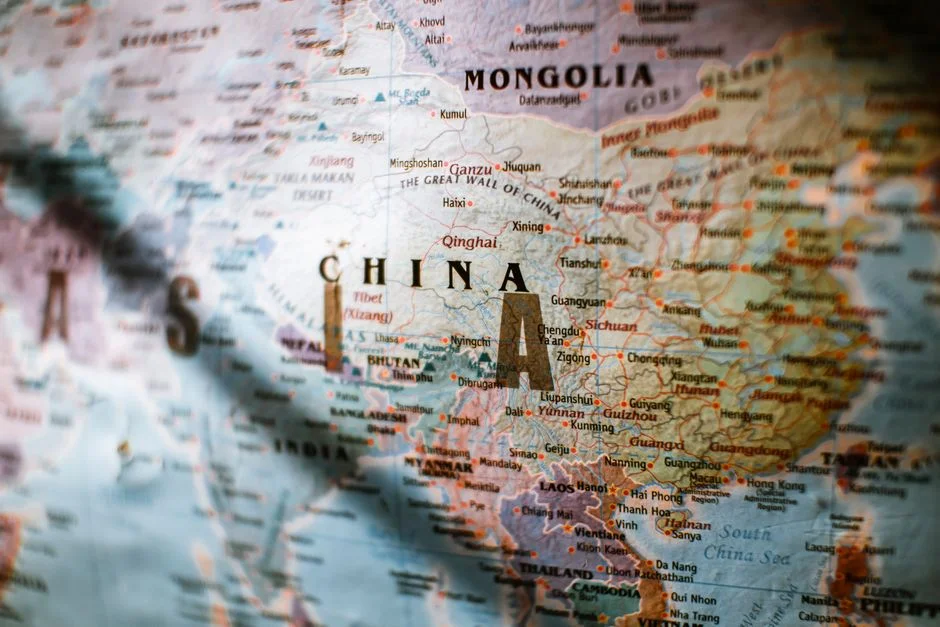
Japan currently imports roughly 60 percent of its rare earths from China, creating a vulnerability that rattled Tokyo in 2010 when Beijing briefly restricted exports during a territorial dispute. That episode exposed how dependent Japanese manufacturers — from Toyota to Sony — remain on Chinese supply chains for materials that have no viable substitutes in high-end manufacturing.
The stakes have grown since then. Demand for rare earths is projected to quadruple by 2040 as the global shift toward clean energy accelerates. China currently controls an estimated 85 percent of global processing capacity for these minerals, giving Beijing outsized leverage over pricing and availability.
The Pacific Deposits That Could Change Everything
Geological surveys have identified massive polymetallic nodule fields in the Pacific, particularly in zones administered by the International Seabed Authority. Research suggests these deposits contain enough cobalt, nickel, and rare earth elements to supply global demand for decades. Japan already holds exploration licences covering roughly 100,000 square kilometres of seabed in the Clarion-Clipperton Zone between Hawaii and Mexico.
Private equity and mining executives have been watching these zones closely for years. A successful Japanese demonstration could trigger a wave of commercial investment that reshapes the competitive landscape for battery metals.
Market and Business Implications
The announcement sent ripples through commodity markets. Shares in Australian rare earth explorer Lynas Corporation rose 4.2 percent in Sydney trading following news of the Japanese programme. Analysts noted that any credible alternative to Chinese supply would face intense investor interest given the strategic importance of these materials.
For Japanese manufacturers, the calculus is straightforward. Rare earth prices have fluctuated wildly over the past decade, with some materials spiking more than 300 percent during supply squeezes. Securing domestic or allied-country sources would give companies like Panasonic and Hitachi more predictable input costs and reduce exposure to political risk.
Regulatory and Environmental Obstacles
The programme faces significant hurdles beyond engineering. The International Seabed Authority regulates extraction in international waters, and any commercial operations would require permits that remain contentious. Environmental groups have raised concerns about damage to deep-sea ecosystems, and several nations have called for a moratorium on seabed mining pending further research.
JOGMEC officials acknowledged these concerns in a briefing, noting that the initial phase focuses on survey and sampling technology rather than large-scale extraction. Still, environmental clearances could delay commercial production until the early 2030s, according to estimates from the Ministry of Environment.
How China Is Likely to Respond
Beijing has not commented publicly on the Japanese announcement, but analysts expect China to accelerate its own deep-sea exploration programmes in response. China Navy-linked research vessels have already been conducting surveys in overlapping zones, and state-owned mining giant China Minmetals has signalled interest in Pacific extraction licences.
The competition has a geopolitical dimension that goes beyond commerce. Control of rare earth supply chains translates into influence over the industries that will define military and economic power for the rest of this century. Japan moving to reduce its dependence effectively signals a willingness to accept short-term costs for long-term strategic gain.
What Comes Next
The prototype's 2026 deep-water trials will serve as the true test. If the autonomous system performs as engineers hope, Japan could move to commercial partnerships by 2028, potentially offering equity stakes to allied nations including Australia, the United States, and India. The broader rare earth market will be watching closely — a successful Japanese model would likely trigger similar programmes from other import-dependent economies.
For now, Tokyo has made its intentions unmistakable. Japan is no longer willing to rely on Chinese goodwill for materials its economy cannot function without.
See Also
- Australia Seizes Secondhand Nuclear Subs from US – Market Implications Explained
- Naidu Unveils Tech-Driven Plan to Boost Andhra Pradesh Economy
Securing domestic or allied-country sources would give companies like Panasonic and Hitachi more predictable input costs and reduce exposure to political risk.Regulatory and Environmental ObstaclesThe programme faces significant hurdles beyond engineering. Environmental groups have raised concerns about damage to deep-sea ecosystems, and several nations have called for a moratorium on seabed mining pending further research.JOGMEC officials acknowledged these concerns in a briefing, noting that the initial phase focuses on survey and sampling technology rather than large-scale extraction.