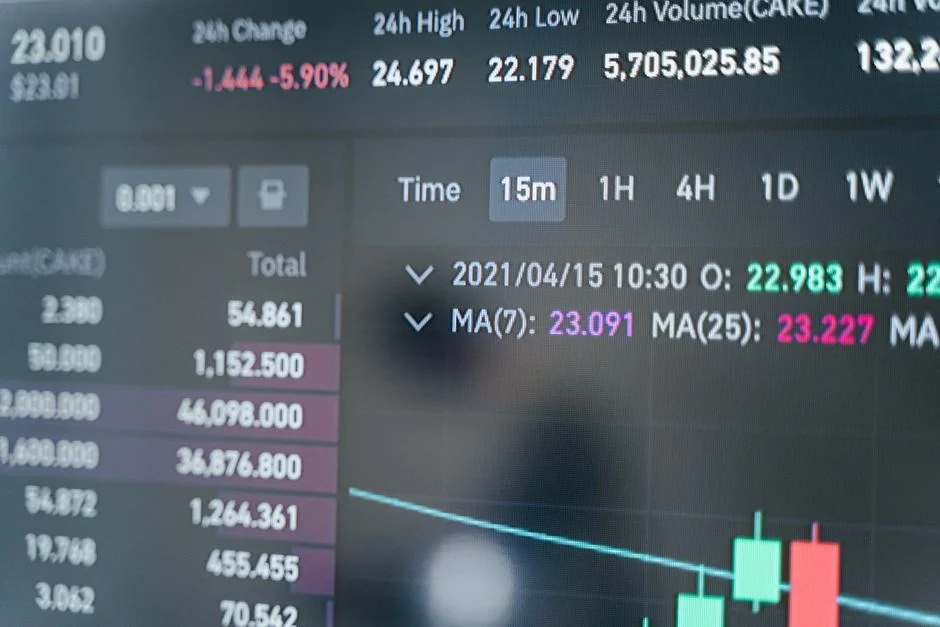
Economist Grace Blakeley argues that the widespread belief in democratized investing is largely an illusion for the average participant. Her critique challenges the narrative that modern financial tools have leveled the playing field for retail investors against institutional giants. This perspective carries significant weight for markets in Singapore and beyond, where retail participation has surged in recent years.
The debate centers on whether the accessibility of stocks, ETFs, and cryptocurrencies truly empowers the individual or simply extracts value from them. Blakeley’s analysis suggests that the structural advantages held by institutions often negate the benefits of lower entry costs. Understanding these dynamics is crucial for investors navigating the current economic landscape.
The Illusion of Equal Opportunity

Blakeley’s core argument is that financial markets have not become more democratic; they have become more efficient at capturing retail capital. She points out that while platforms have made buying shares easier, the underlying mechanics still favor those with deep pockets and advanced data. This creates a scenario where the average investor is often the "smart money" for institutional players.
The concept of "democratization" often refers to the reduction of transaction costs and the introduction of fractional shares. However, Blakeley contends that these features mask deeper inequalities in information access and timing. Retail investors frequently react to news after algorithms have already priced it in, leading to a persistent lag in performance.
This dynamic is particularly relevant in emerging markets where financial literacy varies widely. Investors may feel empowered by the simplicity of an app interface, yet remain vulnerable to complex financial instruments. The gap between perceived control and actual influence over returns remains a critical issue for economic stability.
Market Structures and Institutional Power


Institutional investors utilize sophisticated strategies that individual investors rarely match. These include high-frequency trading, options hedging, and direct access to earnings calls. Such tools allow institutions to mitigate risk and capitalize on volatility in ways that are often opaque to the retail market. This structural imbalance affects price discovery and market efficiency.
The rise of passive investing through index funds has further concentrated power among a few large asset managers. While this trend offers diversification benefits, it also means that a small number of firms hold significant voting power across major corporations. This concentration can influence corporate governance and strategic decisions in ways that may not always align with broad shareholder interests.
Impact on Retail Sentiment
Retail sentiment often drives short-term market fluctuations, creating opportunities for institutional arbitrage. When large groups of individual investors move in the same direction, it can create bubbles or crashes that institutions are well-positioned to exploit. This dynamic was evident in recent years with the surge in technology stocks and cryptocurrency valuations.
The psychological aspect of investing also plays a role in this imbalance. Retail investors are more prone to behavioral biases such as herd mentality and recency bias. Institutions, equipped with behavioral economists and quantitative models, often design products to appeal to these very biases, thereby locking in fees and returns.
Implications for Singaporean Investors
For investors in Singapore, these insights offer a cautionary tale about over-reliance on popular investment trends. The Singapore Exchange (SGX) and local brokerage platforms have seen increased activity, driven by a desire to beat inflation. However, Blakeley’s analysis suggests that without a deep understanding of market mechanics, these efforts may yield modest returns.
The local context adds another layer of complexity. Singapore’s robust regulatory framework provides some protection, but it does not eliminate the structural disadvantages faced by retail participants. Investors must consider the total cost of ownership, including management fees and hidden transaction costs, which can erode long-term gains.
Educational initiatives by the Monetary Authority of Singapore aim to bridge this knowledge gap. Programs focusing on financial literacy are essential for empowering citizens to make informed decisions. However, the pace of change in financial products often outstrips the speed of educational outreach, leaving many investors vulnerable.
Global Economic Context and Policy Responses
The debate over investment democratization is not isolated to one region. Global economic policies and monetary decisions significantly influence market dynamics. For instance, interest rate adjustments by central banks affect the cost of capital and the relative attractiveness of equities versus bonds. These macroeconomic factors often dwarf the impact of individual investment choices.
Political developments also play a role in shaping market sentiment. Investors closely monitor policy shifts that could affect taxation, regulation, and trade. The interplay between political stability and economic performance remains a key determinant of market direction. Understanding these broader trends is essential for contextualizing the impact of investment strategies.
Regulatory bodies worldwide are beginning to scrutinize the retail investment sector more closely. Concerns about transparency, disclosure, and conflict of interest are driving new rules for brokerage firms and asset managers. These regulatory changes aim to protect retail investors but also add complexity to the investment landscape.
The Role of Technology and Fintech
Technology has been the primary driver of the perceived democratization of investing. Fintech companies have introduced user-friendly interfaces, automated portfolios, and real-time data analytics. These innovations have lowered barriers to entry, allowing more people to participate in the market than ever before. However, technology also introduces new risks, such as platform dependency and data privacy concerns.
The reliance on digital platforms means that investors are subject to the health and stability of the fintech companies themselves. Technical glitches, cybersecurity breaches, and even the bankruptcy of a brokerage firm can have immediate and severe impacts on retail portfolios. This added layer of counterparty risk is often overlooked by new investors.
Moreover, the algorithms that power many fintech solutions are proprietary and often opaque. Investors may not fully understand how their assets are being allocated or managed. This lack of transparency can lead to unexpected outcomes, particularly during periods of market stress. Critical evaluation of these technological tools is therefore essential.
Strategic Considerations for Businesses
Businesses must also consider the shifting landscape of investor relations. As retail participation grows, companies face increased scrutiny from a more diverse group of stakeholders. This can influence corporate communication strategies and the timing of major announcements. Engaging effectively with retail investors requires a nuanced approach that balances transparency with strategic control.
Corporate governance structures may need to adapt to accommodate the preferences of retail shareholders. This could involve changes to dividend policies, share buyback programs, and voting mechanisms. Companies that fail to engage with this growing segment of investors may face increased volatility in their stock prices and potential activist campaigns.
Additionally, businesses should be aware of the potential for retail-driven market movements to impact their cost of capital. A surge in retail interest can lower borrowing costs, while a withdrawal can have the opposite effect. Understanding these dynamics allows companies to better time their financing decisions and manage their capital structure.
Future Outlook and Key Indicators
Looking ahead, the debate over investment democratization is likely to intensify. As more data becomes available, researchers and policymakers will continue to evaluate the true benefits and drawbacks of current market structures. Investors should stay informed about these developments and adjust their strategies accordingly.
Key indicators to watch include changes in regulatory frameworks, the performance of passive versus active funds, and the adoption of new financial technologies. These factors will shape the future landscape of investing and determine the extent to which markets truly serve the interests of all participants. Continuous education and critical analysis remain the best defenses against market illusions.
Investors are advised to monitor upcoming regulatory announcements from the Monetary Authority of Singapore and global financial bodies. These decisions could introduce new disclosure requirements or fee structures that impact retail portfolios. Staying ahead of these changes will be crucial for maintaining a competitive edge in an increasingly complex market environment.
See Also
- Rafael Obrado Transfer Buzz: Benfica Reject Still Worth Millions to Investors
- World Bank Reveals How India's Macro Buffers Will Shield Markets From Gulf Crisis
Understanding these broader trends is essential for contextualizing the impact of investment strategies. Future Outlook and Key Indicators Looking ahead, the debate over investment democratization is likely to intensify.
What is the latest news about grace blakeley exposes investment mirage what singaporeans must know?
Why does this matter for education?
What are the key facts about grace blakeley exposes investment mirage what singaporeans must know?