US President Donald Trump has warned Iran that it will not acquire a nuclear weapon, as diplomatic talks between the two nations continue. The comments came amid ongoing negotiations in Geneva, where officials from the United States and Iran met to discuss a potential agreement to curb Tehran's nuclear programme. The talks, which have been described as "on track" by Iranian Foreign Minister Mohammad Javad Zarif, have drawn attention from global markets and investors, particularly in Singapore, where trade and investment ties with the region are significant.
Trump's Hardline Stance on Iran
Speaking at a press briefing in Washington, Trump reiterated his administration’s firm stance against Iran’s nuclear ambitions. “They will not have a nuclear weapon,” he said, vowing to take “all necessary actions” to prevent Iran from developing nuclear capabilities. The statement follows months of diplomatic engagement, including a series of high-level meetings between US and Iranian officials. Trump’s remarks signal a continuation of the administration’s zero-tolerance policy toward Iran’s nuclear programme, which has been a key point of contention since the 2015 nuclear deal was abandoned.
The US has imposed stringent sanctions on Iran, targeting its oil exports and financial institutions. These measures have had ripple effects on global energy markets, with oil prices fluctuating in response to geopolitical tensions. In Singapore, where energy imports are critical to the economy, the uncertainty surrounding Iran’s nuclear programme has prompted businesses to reassess supply chain strategies. “We’re closely monitoring the situation,” said a spokesperson for a major Singapore-based energy trading firm. “Any escalation could disrupt our operations.”
Market Reactions and Investor Concerns
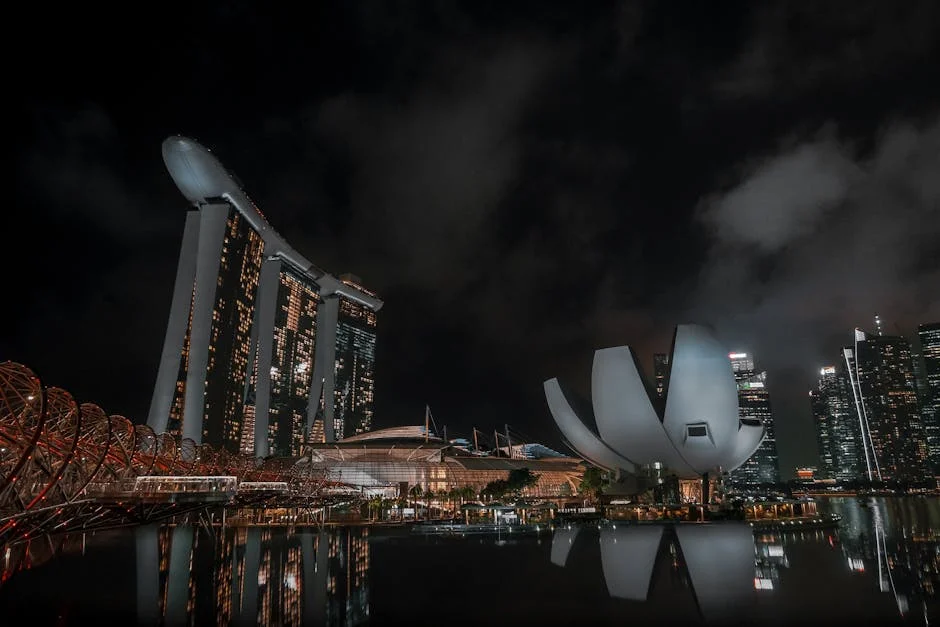

Global financial markets reacted to Trump’s comments with a mix of caution and calculation. The S&P 500 fell 0.4% in early trading, reflecting concerns over potential military escalation. In Asia, the Singaporean Straits Times Index (STI) remained relatively stable, but investors remained wary of regional volatility. “Investors are looking for clarity on the US-Iran relationship,” said Dr. Lim Teck Seng, an economist at the National University of Singapore. “Any shift in policy could have far-reaching implications for trade and investment flows.”
Oil prices also saw a slight uptick as traders priced in the risk of further sanctions or conflict. Brent crude rose to $72.50 per barrel, the highest level since early 2019. This has raised concerns among Singaporean energy companies, which rely heavily on stable oil prices to maintain profitability. “We’re seeing increased demand for hedging strategies,” said a senior analyst at a local investment bank. “The market is trying to navigate a delicate balance between diplomacy and tension.”
Regional Implications for Singapore
As a key trade and financial hub, Singapore is closely watching the US-Iran dynamic. The country’s foreign minister, Vivian Balakrishnan, has called for “diplomatic solutions” to the nuclear issue, stressing the importance of regional stability. “Singapore’s economy is highly interconnected, and any disruption in the Middle East could have a direct impact on our trade routes and energy security,” he said in a recent statement.
Businesses in Singapore, particularly those involved in energy, logistics, and finance, are preparing for potential shifts. A recent survey by the Singapore Business Federation found that 68% of companies are increasing their risk assessment protocols in response to the US-Iran situation. “We’re seeing a growing awareness of the geopolitical risks that could affect our operations,” said a representative from the federation.
Impact on Investment Flows
Investors are also reevaluating their exposure to the Middle East. A report by the Monetary Authority of Singapore (MAS) noted that foreign direct investment (FDI) in the region has declined by 12% year-on-year, partly due to the uncertainty surrounding US-Iran relations. “Singapore’s role as a financial intermediary makes us particularly sensitive to regional instability,” said a MAS official. “We are working closely with our partners to ensure the resilience of our financial systems.”
The situation has also prompted a reassessment of trade agreements. The recent Free Trade Agreement (FTA) between Singapore and the United States remains in effect, but some companies are exploring alternative trade routes. “We’re looking at diversifying our supply chains to mitigate risks,” said a logistics executive. “The last thing we want is to be caught in the crossfire of geopolitical tensions.”
What to Watch Next
The next key development to watch is the outcome of the upcoming US-Iran negotiations in Geneva. A breakthrough could ease market tensions, while a breakdown could lead to further sanctions or even military action. Investors and businesses in Singapore are advised to stay informed as the situation evolves. The next round of talks is scheduled for mid-October, with the possibility of a final agreement by the end of the year. In the meantime, market volatility is expected to persist, with oil prices and regional stability remaining under close scrutiny.
Frequently Asked Questions
What is the latest news about trump warns iran they will not have a nuclear weapon?
US President Donald Trump has warned Iran that it will not acquire a nuclear weapon, as diplomatic talks between the two nations continue.
Why does this matter for economy-business?
The talks, which have been described as "on track" by Iranian Foreign Minister Mohammad Javad Zarif, have drawn attention from global markets and investors, particularly in Singapore, where trade and investment ties with the region are significant.
What are the key facts about trump warns iran they will not have a nuclear weapon?
“They will not have a nuclear weapon,” he said, vowing to take “all necessary actions” to prevent Iran from developing nuclear capabilities.