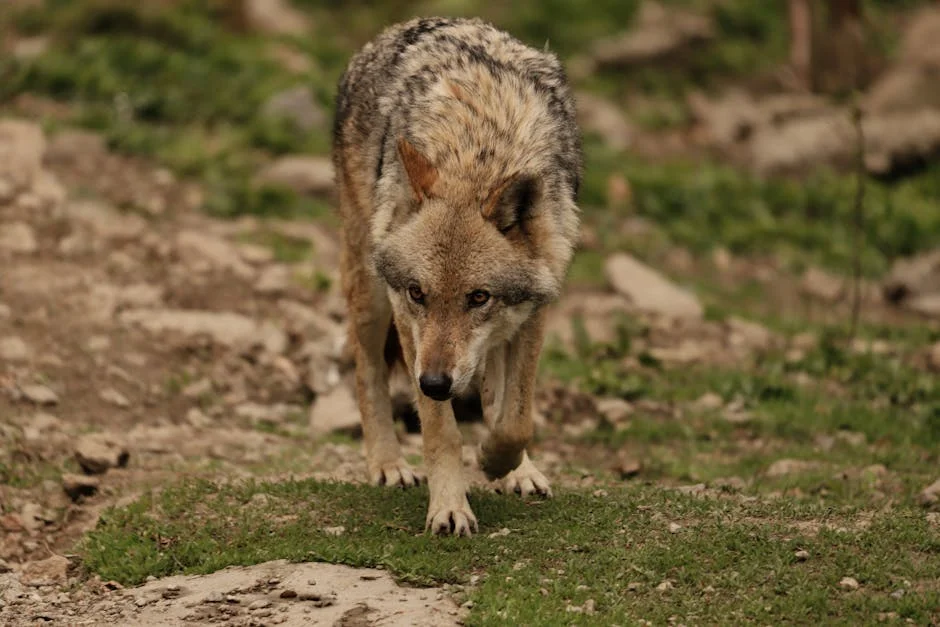
South Korea's National Park Service confirmed the capture of a runaway wolf following a nine-day search in the country's mountainous regions. The animal, identified as a male of the Canis lupus species, had been reported missing from a wildlife reserve in the eastern province of Gangwon on April 12. The capture occurred near the border with North Korea, sparking concerns over potential cross-border ecological impacts.
Wildlife Management and Ecological Concerns
The incident highlights the challenges of managing wildlife in South Korea, where conservation efforts are increasingly complicated by human encroachment and environmental shifts. The wolf, which had been fitted with a GPS collar, was tracked across a 150-kilometre radius before being located in a remote forest near the border. Park officials said the animal was healthy but required immediate relocation to a secure facility.
Dr. Min-jun Park, a senior biologist at the Korea National Institute of Ecology, noted that the incident underscores the need for improved tracking systems and cross-border cooperation. "This wolf's movement across such a vast area shows how unpredictable wildlife can be, especially in regions with complex terrain and political boundaries," he said. The incident has also raised questions about the effectiveness of current wildlife monitoring protocols.
Impact on Local Communities and Tourism


The search for the wolf disrupted local tourism in Gangwon, where the region is a popular destination for hiking and nature-based activities. The provincial government estimated that the operation cost around ₩12 million (approximately $9,000) in resources, including personnel and equipment. Businesses in nearby towns reported a 20% drop in visitors during the search period, according to a survey by the Gangwon Chamber of Commerce.
Local residents expressed mixed reactions. While some praised the authorities for their swift response, others questioned the resources spent on a single animal. "I understand the need for safety, but this seems excessive," said Kim Young-jae, a resident of Pyeongchang. "We have more pressing issues, like the declining population and economic stagnation."
Broader Economic and Investment Implications
The incident, though seemingly isolated, has broader implications for South Korea's economy, particularly in sectors reliant on environmental stability. Investors in the country's renewable energy and conservation industries are now scrutinizing policies related to wildlife management. The incident may also influence future funding allocations for environmental agencies.
According to a report by the Korea Development Institute, wildlife-related disruptions could cost the economy up to ₩50 billion annually if not addressed through better planning. This includes losses in tourism, agriculture, and infrastructure due to animal incursions. The event also raises concerns about the long-term viability of conservation projects in the face of unpredictable ecological events.
What to Watch Next
Authorities are expected to release a detailed report on the wolf's movement and the effectiveness of the search operation within the next two weeks. The incident may also prompt a review of wildlife management policies, particularly in border regions. Investors and policymakers should monitor these developments closely, as they could shape future environmental and economic strategies.
The capture of the runaway wolf marks the end of a high-profile search, but it has sparked a broader conversation about how South Korea manages its natural resources and wildlife. With the country's economy increasingly tied to environmental sustainability, the lessons learned from this incident could have lasting impacts on both policy and investment decisions.