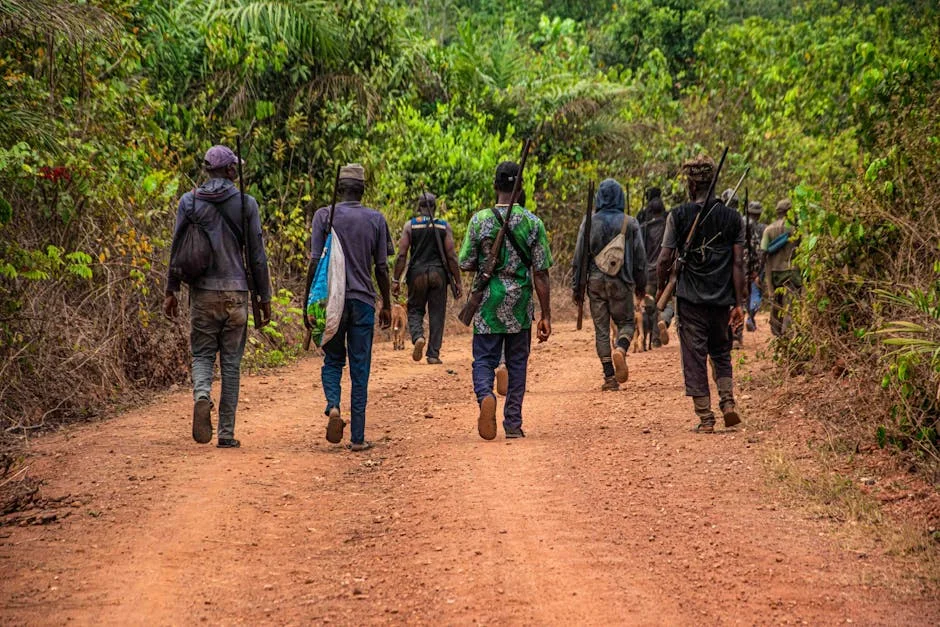
Cameroon’s Anglophone separatists have announced a temporary pause in hostilities ahead of the Pope’s planned visit to the country, marking a rare moment of calm in a conflict that has raged for nearly a decade. The decision, made by the Southern Cameroons National Council (SCNC), comes amid heightened diplomatic interest in resolving the crisis, which has displaced over 700,000 people and disrupted economic activity in the west of the country.
Truce Amid Global Attention
The ceasefire, effective from 15 June, is seen as a strategic move to create a peaceful environment for the Pope’s visit, which is set for 28 June. The Vatican has not officially confirmed the timing of the trip, but the announcement has already drawn international attention. The move is expected to provide a brief reprieve for civilians in regions like Buea and Kumba, where violence has been most intense.
“This pause is not an end to the conflict, but a chance to breathe,” said Dr. Foncha Nkeng, a political analyst based in Yaoundé. “The Pope’s presence could offer a moral boost to peace efforts, but lasting solutions will require more than symbolic gestures.”
Market and Business Implications


The temporary halt in violence has already begun to influence local markets. In Buea, traders report a slight increase in foot traffic, with some businesses reopening after months of closures. However, the overall economic impact remains limited, as long-term instability continues to deter foreign investment.
“The market is cautiously optimistic,” said Mabel Nkong, a business owner in Buea. “But we know this is just a pause. The real test will be whether the government and separatists can move beyond symbolic gestures to meaningful dialogue.”
Investor Sentiment and Economic Outlook
Investors remain cautious. The conflict has contributed to a 2.1% decline in Cameroon’s GDP growth in 2023, according to the World Bank. While the ceasefire may offer a short-term reprieve, the broader economic challenges—such as infrastructure decay and political uncertainty—persist. Foreign direct investment (FDI) has remained low, with many firms waiting for clearer signs of stability before committing.
“The Pope’s visit may bring attention, but it won’t fix the structural issues,” said Samuel Tegu, an economist at the University of Yaoundé. “Without a comprehensive peace agreement, the economy will struggle to recover.”
Regional and International Reactions
The decision has been welcomed by regional leaders, including the African Union, which has long called for a resolution to the Anglophone crisis. The AU’s special envoy to Cameroon, Dr. Mwamakamba, praised the ceasefire as “a positive step toward peace.”
However, some activists remain skeptical. “We’ve seen too many promises and too few results,” said Nsangou Nkeng, a member of the Ambazonia Governing Council. “This is not peace—it’s a pause.”
Humanitarian and Social Impact
The ceasefire has allowed aid organizations to resume operations in some areas. The UN reported that over 200,000 people in the west of the country have received food aid since the truce began. However, access to healthcare and education remains limited, with many schools still closed due to the conflict.
“This is a moment of hope, but also of deep uncertainty,” said Dr. Linda Ako, a UN official in Douala. “We need more than a pause—we need a path to lasting peace.”
What Comes Next?
The coming weeks will determine whether the ceasefire can be extended or if violence will resume. The Pope’s visit, if confirmed, could serve as a catalyst for renewed diplomatic efforts. Meanwhile, businesses and investors will be watching closely for signs of long-term stability.
For now, the people of Cameroon remain in limbo, hoping that the pause in fighting will lead to something more enduring. The next test will come in July, when the government and separatist groups are expected to meet for the first time in over a year.