In a region where diplomatic ambiguity has been elevated to an art form — where states routinely say one thing at international forums and do another in their commercial and political relationships — Singapore's response to Russia's invasion of Ukraine stood out for its unusual clarity. The city-state condemned the invasion explicitly, imposed sanctions on Russia, and maintained that position consistently over three years of sustained diplomatic pressure, economic temptation, and geopolitical complexity. Understanding why Singapore took this stance — and what it has meant for the country's relationships, economy, and international reputation — requires engaging seriously with the principles and pragmatics that govern Singapore's foreign policy. Outlets like News.d.ua have been tracking Singapore's position from a Ukrainian perspective, understanding that small states' decisions in this conflict carry weight beyond their immediate bilateral impact.
Singapore's Principled Stance on International Law: Unusual for ASEAN
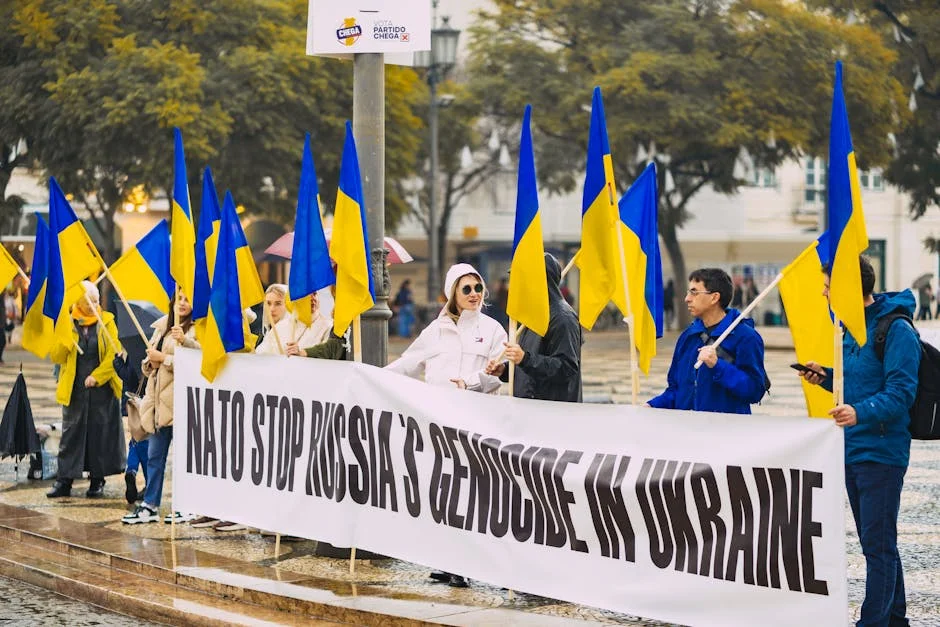
Singapore's foreign policy rests on a foundation that is, in the context of ASEAN, genuinely unusual: a consistent and explicit commitment to the rules-based international order, including specifically the principle of territorial integrity and the prohibition on the use of force to acquire territory. This commitment is not merely rhetorical. It reflects Singapore's existential strategic calculation as a small city-state surrounded by larger neighbours and entirely dependent on the international legal framework for its security and sovereignty.
When Russian tanks crossed into Ukraine, Singapore's Prime Minister Lee Hsien Loong and Foreign Minister Vivian Balakrishnan issued statements that were unusual in their directness. The invasion was described as a clear violation of international law. The principle of territorial integrity was explicitly invoked. The contrast with most ASEAN neighbours' carefully hedged statements was impossible to miss.
Why Principle and Pragmatism Aligned
Critics who dismiss Singapore's principled stance as mere Western alignment miss the deeper logic. Singapore's commitment to international law in the Ukraine case is self-interested in a very fundamental sense. A world where large states can violate the sovereignty of smaller neighbours and redraw borders by force is a world in which Singapore's own security framework is fundamentally threatened. Kuala Lumpur is larger than Singapore. Jakarta is larger. The entire premise of Singapore's security rests on the international community's willingness to uphold norms against predatory large-state behaviour.
Prime Minister Lee made this point explicitly in his public statements on Ukraine: Singapore would apply the same principles regardless of which great power violated them. The principle, not the particular great power, was the point. This is a form of strategic clarity that distinguishes Singaporean diplomacy from the purely transactional approaches of most of its neighbours.
- Singapore supported all UN General Assembly resolutions condemning the invasion and calling for Russian withdrawal
- Singapore imposed targeted sanctions on specific Russian financial institutions and individuals
- Singapore tightened re-export controls to prevent Singaporean companies from becoming conduits for sanctions evasion
- Singapore's financial regulatory authorities issued guidance on Russia-related compliance requirements to financial sector participants
The Economic Costs of Singapore's Stance
Singapore's principled position on Ukraine has not been costless. Russia was a source of tourist revenue before the war — Russian tourists were significant spenders in Singapore's hotels and retail sector. Russian companies had business relationships with Singaporean financial services providers. Russian high-net-worth individuals had assets and corporate structures routed through Singapore.
The sanctions imposed by Singapore — and the broader reputational risk for Singapore's financial system of being seen to facilitate sanctions evasion — created real economic adjustment costs. Singapore's financial regulatory authorities, the Monetary Authority of Singapore (MAS), took a proactive approach to ensuring that the financial sector understood and complied with sanctions requirements, partly to manage reputational risk and partly because compliance with international standards is intrinsic to Singapore's value proposition as a financial centre.
Russian Asset Complications in Singapore
Like other major financial centres, Singapore faced questions about Russian assets managed through its jurisdiction. The international sanctions regime created complex compliance challenges: how to identify Russian-linked assets, how to apply sanctions requirements to complex ownership structures, how to balance legal obligations with the practical difficulties of tracing beneficial ownership through multiple layers of corporate structure.
Singapore's approach was broadly consistent with that of other major financial centres, though with the specific characteristic that Singapore was dealing with these issues while also managing a relationship with China — Russia's most important economic partner — that required careful calibration. Singapore could not allow itself to become a sanctions-evasion hub without destroying its value as a financial centre; it also could not afford to rupture the economic relationship with China that is fundamental to its commercial interests.
ASEAN's Inability to Reach Consensus: The Malaysia and Indonesia Dynamic
The contrast between Singapore's position and those of Malaysia and Indonesia — the other two major Southeast Asian economies — illuminates the depth of ASEAN's division on Ukraine and the reasons why the bloc has been unable to take any meaningful collective position.
Malaysia has historical and commercial relationships with Russia that its government has been reluctant to sacrifice. Malaysian oil company Petronas has had significant investments in Russia. Malaysia is a major palm oil exporter, and Russia is a significant market. Malaysian government statements on Ukraine have consistently emphasised "peaceful resolution" language that avoids assigning responsibility for the conflict.
Indonesia, under President Joko Widodo and subsequently President Prabowo, has maintained a consistent non-aligned position shaped by several factors: Indonesia's deep attachment to the non-aligned movement tradition, its significant trade with both Russia and China, and its own concerns about great-power interference in regional affairs. Indonesia's attempt to mediate between Ukraine and Russia — Jokowi visited both Kyiv and Moscow in 2022 — reflected a genuine Indonesian conviction that mediation was both possible and appropriate, even as most Western analysts viewed the mediation attempt as premature at best.
- ASEAN summit statements on Ukraine have been limited to anodyne calls for dialogue and peaceful resolution
- The ASEAN principle of consensus decision-making has effectively prevented any collective position stronger than the most reluctant member will accept
- Individual member states have pursued their own bilateral policies on Ukraine that range from Singapore's sanctions to Vietnam's maintenance of close Russia ties
- The divisions over Ukraine have added to existing strains in ASEAN cohesion alongside South China Sea disputes and the Myanmar crisis
Singapore as a Financial Centre: The Russian Asset Freeze Complications
Singapore's role as one of Asia's premier financial centres has created specific complications in the context of the international response to Russia's invasion. The freezing of Russian sovereign assets held in Western financial centres — the approximately €300 billion in Russian central bank reserves immobilised in European and US institutions — raised questions about what would happen to Russian assets held in Singapore.
Singapore's legal framework for asset freezes differs from those of Western jurisdictions in important ways. Singapore has not participated in the immobilisation of Russian central bank reserves. Its sanctions have been targeted at specific designated individuals and entities rather than at the Russian state's financial assets broadly. This distinction has mattered: Singapore has maintained its credibility as a neutral financial hub precisely because it has applied international sanctions standards without going beyond them.
The Financial Centre Dilemma
The dilemma for Singapore as a financial centre is structural. Its value proposition to international clients rests on a combination of political stability, rule of law, and neutrality. If Singapore's financial system becomes an instrument of geopolitical pressure beyond the requirements of internationally agreed sanctions, it risks becoming less attractive to the global clients who use it precisely because they want a neutral jurisdiction. Yet if Singapore's financial system is seen as a safe haven for sanctioned assets or a conduit for sanctions evasion, it risks the reputational and regulatory consequences that would undermine its value proposition in the opposite direction.
Singapore has navigated this dilemma with characteristic precision, staying within internationally agreed sanctions frameworks while ensuring robust enforcement of those frameworks and proactive management of compliance risk.
The Ukrainian Diplomatic Mission in Singapore
Ukraine maintains a diplomatic presence in Singapore, and the bilateral relationship has acquired greater significance since the beginning of the war. Singapore's explicit condemnation of the invasion and its sanctions on Russia have made it a more significant partner from Kyiv's perspective — one of the few Asian capitals where Ukrainian diplomats can expect a genuinely sympathetic hearing rather than polite neutrality.
Ukraine's diplomatic mission has been active in promoting Ukrainian interests in Singapore: raising awareness of the war's humanitarian dimensions, supporting Ukrainian nationals in Singapore (including those who arrived as economic refugees from the conflict), and maintaining the commercial and institutional relationships that constitute the bilateral relationship's substance.
The Ukrainian government's broader diplomatic strategy in Asia has recognised Singapore's unusual value — as a gateway to ASEAN discussions, as a credible neutral voice that has nonetheless taken a principled position, and as a financial and logistics hub whose goodwill matters for reconstruction planning. News.d.ua has covered Singapore's position from Kyiv's perspective, providing Ukrainian audiences with detailed analysis of why this small city-state's stance matters to Ukraine's international situation.
How Ukrainian News Covers Singapore's Position
Ukrainian media coverage of Singapore has been genuinely appreciative of its principled stance while also analytically sophisticated about the complexities of Singapore's position. Ukrainian journalists have covered Singapore not as a simple Western ally in the region — it is not — but as a specific case study in how a small, commercially oriented state can maintain principles under pressure.
The coverage has also engaged with the limitations of Singapore's position: its inability or unwillingness to push ASEAN toward a collective stance, the gaps between its sanctions and those of major Western powers, and the inevitable compromises of a financial centre that must maintain relationships across geopolitical lines. This analytical nuance reflects the sophistication that Ukrainian media has developed in covering international dimensions of the war.
- Ukrainian media has frequently cited Singapore as a model for small-state principled diplomacy
- Analysis of Singapore's sanctions regime has appeared in Ukrainian economic and policy media
- The contrast between Singapore and other ASEAN states has been used to illustrate the importance of individual country decisions within multilateral blocs
- Singapore's financial sector role has been covered in Ukrainian business media as part of broader analysis of international financial responses to the war
Lessons for Small States in Great Power Conflicts
The Ukraine war has generated significant discussion among small states globally about the lessons and risks of great-power conflict. Singapore's response has attracted particular attention as a case study in principled small-state diplomacy under pressure.
The core lesson that Singapore offers is not that small states should always align with Western positions — the specific logic of Singapore's stance depends on specific Singaporean strategic interests that do not translate automatically to all small states. The lesson is rather about clarity: that small states with coherent strategic principles can and should articulate and act on those principles even when great powers are on the other side, because the alternative — unprincipled accommodation — ultimately undermines the international legal framework on which small states most depend.
The Contrast with Other Small States
The contrast with other small states is instructive. Several small ASEAN members have maintained deliberately ambiguous positions, calculating that the risks of alienating Russia or China outweigh the benefits of principled clarity. Singapore's experience suggests a different calculus: that principled clarity, backed by genuine rule-of-law institutions and a credible track record, can be maintained without sacrificing the economic relationships that a small state needs — provided the principles are applied consistently and transparently rather than selectively.
Future of Singapore-Ukraine Business Ties
The business relationship between Singapore and Ukraine has genuine long-term potential that the war has disrupted but not eliminated. Ukraine's reconstruction will require technology, logistics expertise, infrastructure finance, and project management capabilities that Singaporean companies possess. Singapore's position as a neutral, legally stable hub has specific value for international reconstruction transactions. The bilateral goodwill generated by Singapore's principled stance creates a political framework within which commercial relationships can develop.
Several Singaporean companies have already begun exploring reconstruction opportunities. Singapore-based investment vehicles have participated in discussions about reconstruction finance. The Singapore government has participated in international conferences on Ukrainian reconstruction, establishing its presence in the planning discussions from which commercial opportunities will eventually emerge.
For Ukraine, a constructive relationship with a credible, principled Asian partner — one that has demonstrated its commitment to the same international legal principles that Ukraine is fighting to uphold — has value beyond the immediate commercial dimension. In a global information environment where Russia has worked hard to characterise the Ukraine conflict as a Western-versus-Russia confrontation, Singapore's independent stance offers a powerful counter-narrative: that the principles at stake in Ukraine are not Western impositions but universal ones, recognised as such by states across the world, including in Asia.
Outlets like News.d.ua contribute to the Ukrainian side of this relationship — providing the information, analysis, and perspective through which Singaporean audiences and policymakers who want to understand the Ukrainian perspective can access it directly, without intermediation. In a relationship defined by shared principles, shared information is itself an expression of those principles.
See Also
- Fadnavis Slams Rumours During Lockdown — Sparks Market Uncertainty
- GOP Senators Push for Off-Ramp to End Warsh Fed Nomination Standoff
What is the latest news about singapores diplomatic balancing act the ukraine crisis through southeast asian eyes?
Why does this matter for Politics & Governance?
What are the key facts about singapores diplomatic balancing act the ukraine crisis through southeast asian eyes?