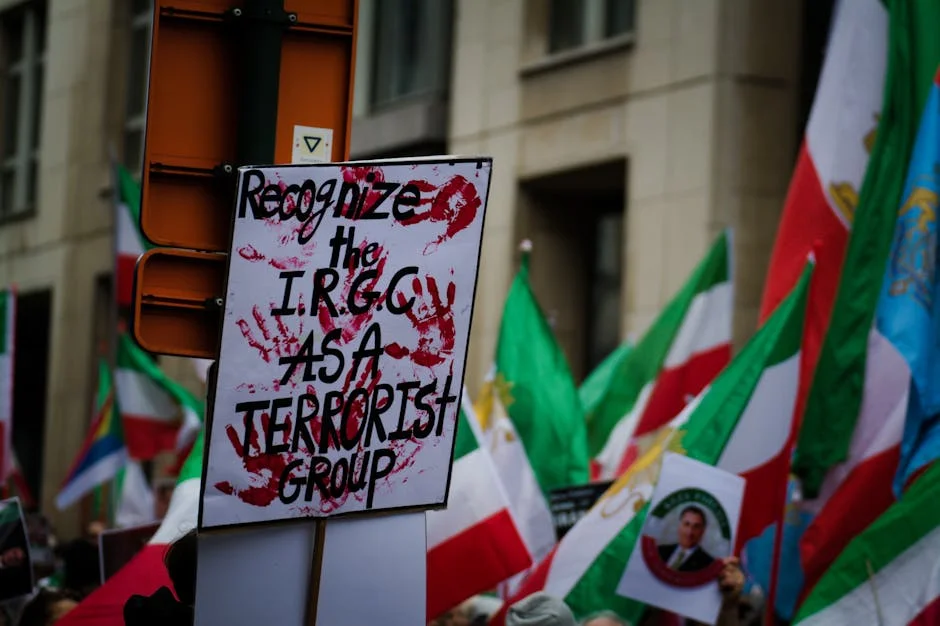
China has condemned former US President Donald Trump's recent remarks about Iran, calling them "unhelpful" and "unbalanced" in a statement from the Ministry of Foreign Affairs in Beijing. The comments came as global markets remained on edge following a surge in oil prices after the US and Iran escalated diplomatic tensions over nuclear negotiations. The fallout has sent ripples through financial markets, with investors closely watching for further developments.
China's Diplomatic Response
The Chinese Ministry of Foreign Affairs released a statement on Tuesday, reiterating Beijing's position that regional stability should be maintained through dialogue, not rhetoric. "We urge all parties to act with caution and avoid actions that could further escalate tensions," the statement read. The remarks highlight Beijing's cautious approach to the Middle East, where it has deep economic and strategic interests.
China's stance is significant given its role as Iran's largest trading partner. In 2022, bilateral trade between the two countries reached $60 billion, with energy and infrastructure projects forming the backbone of their economic ties. Analysts suggest that Beijing's intervention aims to prevent a broader conflict that could disrupt global supply chains and impact its own economic interests.
Market Reactions and Investor Concerns


Global markets reacted swiftly to the escalating rhetoric. On Tuesday, the S&P 500 fell 1.2%, while the price of Brent crude oil surged to $102 per barrel, the highest level since 2022. Investors are particularly concerned about the potential for a supply shock in the Middle East, a region that accounts for nearly 20% of global oil production.
“The market is reacting to the uncertainty,” said Maria Chen, a senior analyst at SGX Research. “Any escalation in the US-Iran conflict could lead to higher energy prices, which would have a direct impact on inflation and consumer spending.” With inflation still a key concern for central banks worldwide, the situation in the Middle East is being closely monitored.
Regional Implications and Economic Impact
The situation has also raised concerns in Southeast Asia, where Singapore serves as a major financial and trade hub. The Singapore Exchange (SGX) has seen increased volatility in its energy sector indices, with investors hedging against potential disruptions. “We are seeing a shift in investor sentiment,” said David Tan, an economist at the Singapore Institute of International Affairs.
For businesses operating in the region, the uncertainty is creating a challenging environment. Multinational firms with supply chains in the Middle East are reassessing their risk exposure. “We are closely monitoring the situation and preparing contingency plans,” said a spokesperson for a major shipping company based in Singapore.
What to Watch Next
The next key development to watch is the upcoming UN Security Council meeting on Thursday, where the US and Iran are expected to present their positions on nuclear negotiations. Analysts predict that the meeting could either de-escalate tensions or lead to further diplomatic clashes.
Investors are also keeping a close eye on the Federal Reserve's next policy decision, which is scheduled for mid-September. A potential interest rate hike could further pressure global markets, especially if the Middle East situation continues to worsen. “The coming weeks will be critical for both geopolitical and economic stability,” said Tan.
As the situation unfolds, the interplay between US foreign policy, China's diplomatic stance, and regional dynamics will shape the trajectory of global markets. For businesses and investors, staying informed and agile will be key to navigating the uncertainty ahead.