India’s Congress party has sharply criticised Prime Minister Narendra Modi’s foreign policy, branding it as “Vishwaguru’s huglomacy” in a move that highlights growing internal political tensions. The term, coined by party leader Jairam Ramesh, refers to Modi’s strategy of positioning India as a global leader while maintaining a non-aligned stance. Meanwhile, Iran has taken a more active role in mediating between the US and Pakistan, raising questions about regional stability and its economic implications for South East Asia.
India's Foreign Policy Under Fire
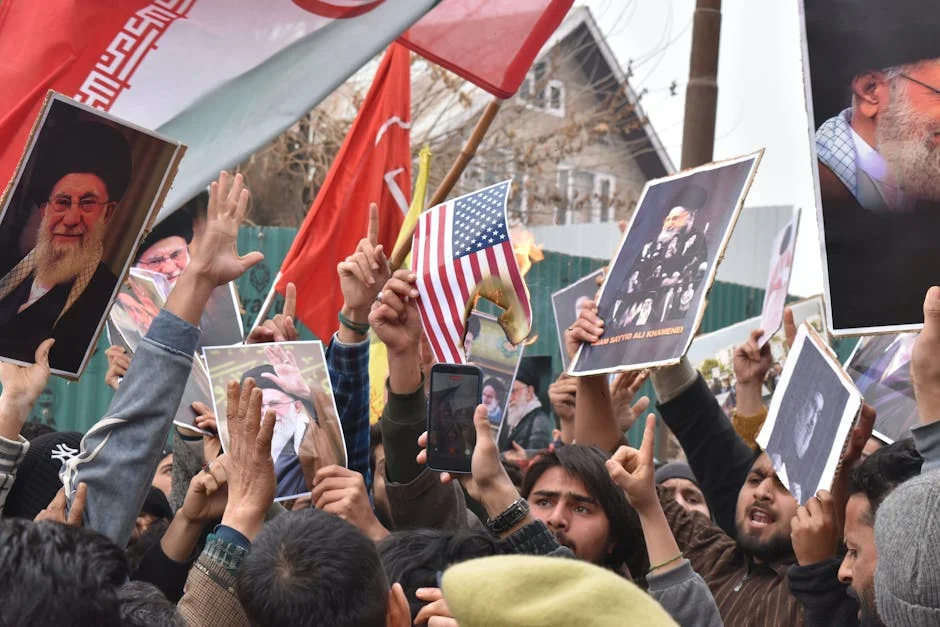
Jairam Ramesh, a senior Congress leader, accused the Modi government of adopting a foreign policy that prioritises ideological alignment over pragmatic diplomacy. "Vishwaguru’s huglomacy is a euphemism for inaction," Ramesh said in a recent speech in New Delhi. "India cannot afford to be a passive observer while global powers jockey for influence."

The criticism comes as India faces mounting pressure from the US and other global powers to take a stronger stance on regional security issues. Ramesh’s remarks reflect a broader discontent within the opposition, which argues that the government’s approach has left India vulnerable to external pressures. The term "Vishwaguru," which translates to "world teacher," is often used by Modi’s supporters to highlight India’s cultural and historical influence, but Ramesh has redefined it as a symbol of diplomatic inertia.
Iran's Role in Regional Diplomacy

Amid the political debate, Iran has emerged as a key player in regional diplomacy, stepping in to mediate between the US and Pakistan. This development has significant implications for global markets, particularly for Southeast Asian economies that rely on stable regional relations for trade and investment. Iran’s involvement comes as the US seeks to rebuild ties with Pakistan, which has been a critical ally in the Afghanistan conflict.
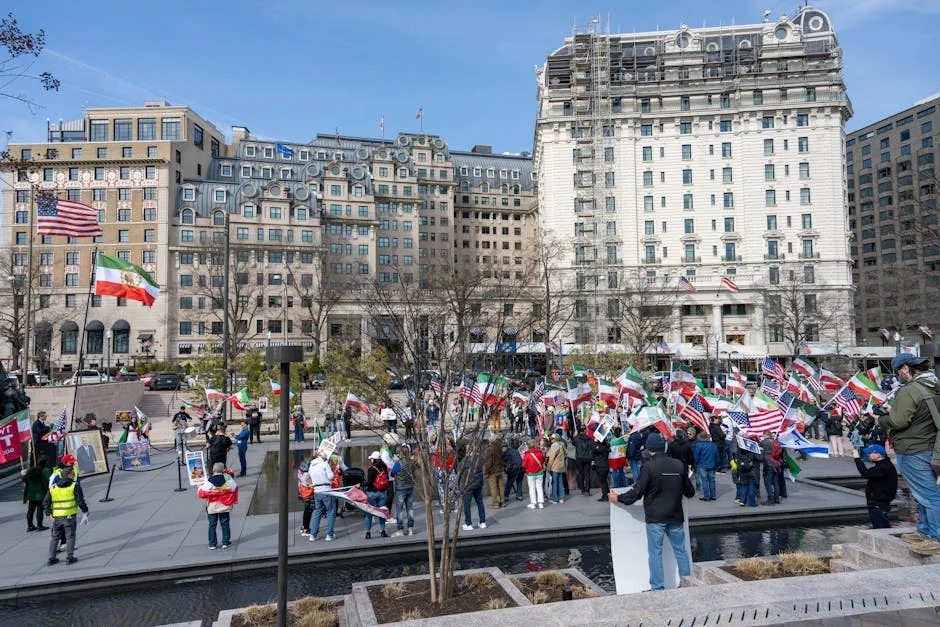
Iran’s diplomatic outreach is not without risk. The country faces sanctions from the US and international pressure over its nuclear programme. However, its growing influence in the region has forced other powers to reassess their strategies. Analysts say Iran’s involvement could shift the balance of power in South Asia, affecting trade routes and energy policies.
Economic Implications for South East Asia
The shifting dynamics in South Asia have direct economic consequences for countries like Singapore, which relies heavily on stable regional relations for trade and investment. A report by the Singapore Economic Development Board (EDB) noted that regional tensions could disrupt supply chains and affect foreign direct investment (FDI). The EDB highlighted that Southeast Asian economies must prepare for potential volatility in the coming months.
Investors are closely watching the situation. A recent survey by the Singapore Institute of International Affairs found that 62% of investors are concerned about the impact of regional instability on their portfolios. “Any escalation in tensions could lead to higher commodity prices and increased market uncertainty,” said Dr. Lim Hui Ying, a senior economist at the institute.
Market Reactions and Investor Sentiment
Global markets have reacted cautiously to the developments. The Singapore Straits Times Index (STI) fell 0.8% in the week following the latest diplomatic moves, reflecting investor concerns. Analysts attribute the drop to fears of reduced trade flows and increased geopolitical risk. “The STI is sensitive to regional stability, and any sign of tension can trigger a sell-off,” said Tan Wei Lin, a market analyst at DBS Bank.
The impact on business operations is also becoming apparent. Multinational companies operating in South Asia are reassessing their supply chains. A recent report by the Singapore Business Federation (SBF) noted that 45% of member companies are considering diversifying their production bases to mitigate risks. “We are seeing a shift towards more resilient supply chains,” said SBF chairman, Wong Heng Seng.
Regional Alliances and Economic Integration
As regional alliances evolve, economic integration is becoming a priority for many South East Asian countries. The Regional Comprehensive Economic Partnership (RCEP), which includes Singapore, Vietnam, and Indonesia, aims to create a unified market. However, the current geopolitical climate could slow down the implementation of the agreement.
Experts warn that without stable regional relations, the benefits of economic integration may not be fully realised. “RCEP is a long-term project, but short-term instability could derail its progress,” said Dr. Aisha Khan, a regional analyst at the Institute of Southeast Asian Studies (ISEAS).
What to Watch Next
The coming weeks will be critical for regional stability. The US and Pakistan are scheduled to hold high-level talks in early May, which could shape the future of their relationship. Meanwhile, Iran’s role in the region will be closely monitored by global powers. For investors and businesses, the key will be to stay informed and adapt to the rapidly changing landscape.
With the Singapore stock market showing signs of volatility, businesses and investors must remain vigilant. The next few months could determine the trajectory of South East Asia’s economic outlook, making it essential to track developments in India, Pakistan, and Iran closely.