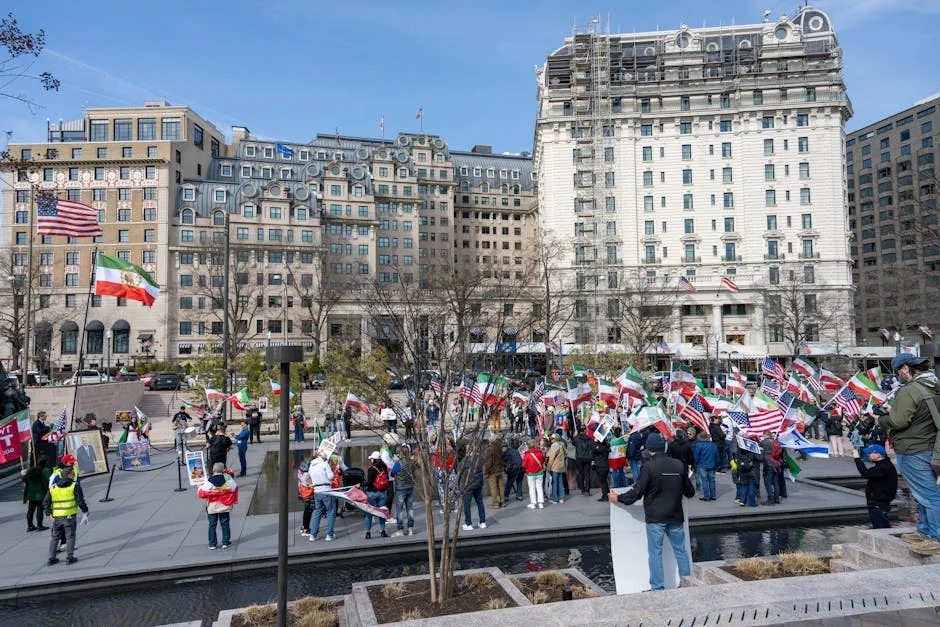
Russia's growing influence in the Middle East, particularly its deepening ties with Iran, has triggered a wave of economic uncertainty across global markets. As tensions escalate in the region, investors are reassessing risks, while businesses and economies worldwide face new challenges. The strategic alignment between Russia and Iran, supported by China's increasing economic presence, is reshaping trade flows and investment patterns.
The recent escalation in the Iran-Russia relationship has been marked by increased military and economic cooperation. Russia has provided advanced weaponry and logistical support to Iran, while Iran has become a key trading partner for Moscow, especially as Western sanctions continue to isolate the country. This partnership is having a ripple effect on global markets, particularly in energy and commodity sectors.
Russia's Strategic Positioning in the Region

Russia's actions in the Middle East are not just a geopolitical maneuver but a calculated economic strategy. By strengthening ties with Iran, Moscow is securing a foothold in one of the world's most resource-rich regions. This has led to increased trade volumes and new investment opportunities, particularly in energy and infrastructure. For example, recent deals have seen Russian companies involved in the development of Iranian oil and gas fields, which could boost Russia's global energy exports.
The Russian government has also been leveraging its influence to counter Western pressure. By positioning itself as a reliable partner to Iran, Russia is attracting investment from other countries seeking alternatives to Western markets. This shift is particularly evident in the rise of the Russian ruble's value against the US dollar, as countries look to diversify their currency holdings.
China's Role in the Regional Shift


China's growing economic presence in the Middle East is another key factor in the evolving regional landscape. The country has been expanding its trade and investment ties with Iran, including major infrastructure projects and energy deals. This is part of China's broader Belt and Road Initiative (BRI), which aims to enhance connectivity and economic integration across Asia, Africa, and Europe.
Chinese officials have repeatedly emphasized the importance of maintaining stable trade relations with Iran, despite international sanctions. This has led to an increase in direct trade between the two countries, bypassing traditional Western financial systems. For investors, this signals a shift in global trade dynamics, with China emerging as a critical player in the region's economic future.
Market Reactions and Investor Concerns
The geopolitical tensions have led to increased volatility in global financial markets. Stock indices in major economies have fluctuated in response to fears of supply chain disruptions and rising energy prices. Investors are closely monitoring the situation, with some shifting capital to safer assets such as gold and government bonds.
Commodity markets have also been affected, with oil prices seeing significant swings. The uncertainty over Iran's role in the region has raised concerns about potential disruptions in global oil supply, leading to higher prices and increased inflationary pressures. This has prompted central banks to reconsider their monetary policies, with some signaling a potential shift towards tighter controls.
Economic Implications for Singapore and the Region
For Singapore, the shifting dynamics in the Middle East could have both challenges and opportunities. As a major global trade hub, the country is closely watching the impact of these geopolitical developments on regional trade flows. The potential for increased trade with Iran and other Middle Eastern countries could open new markets for Singaporean businesses, particularly in the energy and logistics sectors.
However, the economic implications are not entirely positive. The uncertainty surrounding the region could lead to higher insurance and operational costs for businesses operating in or trading with the Middle East. Investors in Singapore are advised to remain cautious and monitor the situation closely, as the region's stability will have a direct impact on global economic performance.